
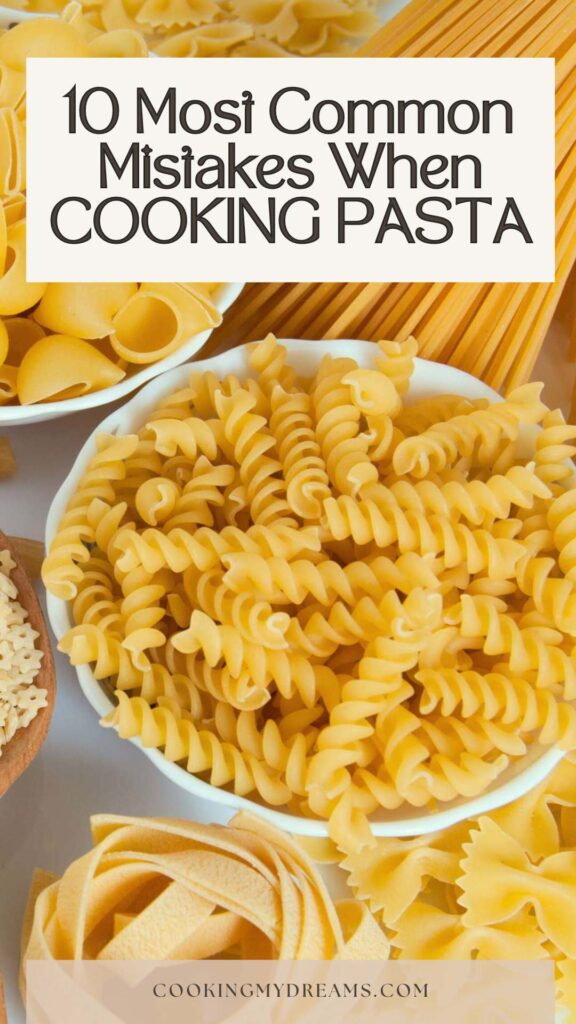
Cooking pasta may seem straightforward, but achieving that perfect al dente texture with a perfect taste requires attention to detail. Here are the ten most common mistakes people make when cooking pasta and how to avoid them.
This post may contain affiliate links, which means I may make a small commission off items you purchase at no additional cost to you.
Pasta is a staple in kitchens around the globe, loved for its versatility and the comfort it delivers with every bite. Yet, despite its apparent simplicity, preparing the perfect pasta dish is an art that eludes many. From the bustling streets of Rome to the quiet kitchens of home cooks, pasta, when cooked incorrectly, can transform from a delightful dish to a disappointing mess. Understanding the common mistakes is key to make sure your spaghetti, fusilli, or penne always turn out just right.
I'll walk you through the ten most common mistakes people make when cooking pasta and provide insights on how to avoid them.
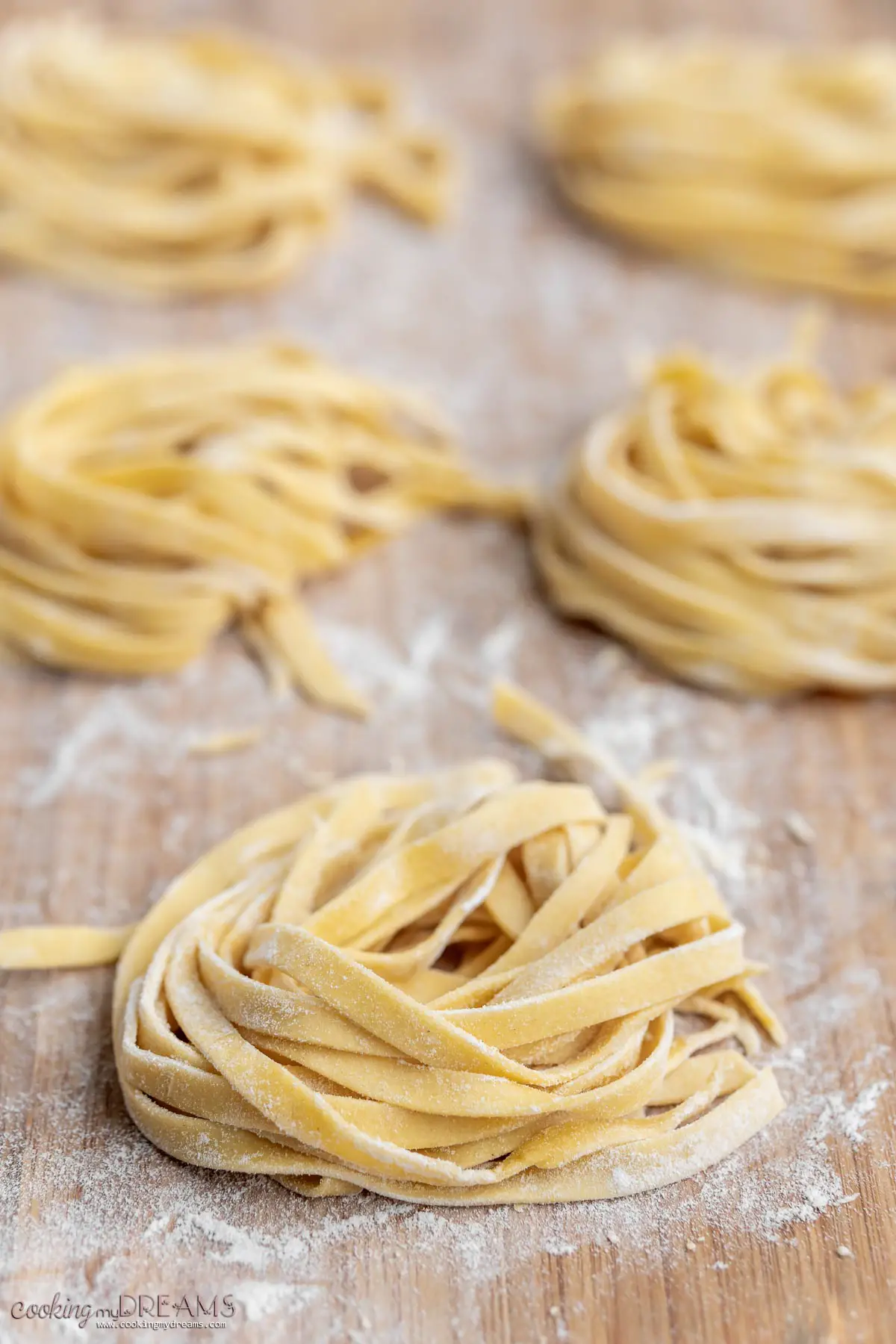
Check out also these guides on pasta shapes and sauces, how to make fresh pasta without tools and how to freeze and cook fresh pasta.
10 Most Common Mistakes
1. Not Using Enough Water
Mistake: Using a small pot with too little water can cause the pasta to clump together and cook unevenly.
Solution: Use a large pot with plenty of water-at least 4-6 quarts for every pound of pasta. This allows the pasta to move freely and cook evenly. A good rule of thumb is to use 1 quart of water per 100 grams (1 portion) of pasta.
2. Failing to Salt the Water
Mistake: Unsalted water results in bland pasta. Salting pasta water is crucial for flavor. No matter how salted the sauce is, you'll taste the difference if the pasta is bland.
Solution: Add about 1-2 tablespoons of salt per gallon of water. The water should taste like the sea. This step ensures that the pasta absorbs some of the salt, enhancing its flavor from within.
3. Adding Oil to the Water
Mistake: Adding oil to the boiling water to prevent pasta from sticking is a myth and a mistake. The oil coats the pasta, making it difficult for the sauce to adhere.
Solution: Stir the pasta occasionally during cooking to prevent sticking and don't overcook it. This method is effective and ensures your pasta can hold onto the sauce properly.
4. Not Stirring the Pasta Enough
Mistake: Neglecting to stir the pasta can result in it clumping together and cooking unevenly.
Solution: Stir the pasta immediately after adding it to the boiling water and then stir occasionally throughout the cooking process. This helps keep the pasta separated and ensures even cooking.
5. Overcooking the Pasta
Mistake: Overcooked pasta becomes mushy and loses its structure.
Solution: Follow the cooking time on the pasta package but start checking a couple of minutes earlier. Pasta should be cooked to al dente, which means it should be firm to the bite. Taste a piece of pasta to determine doneness. If using loose sauces, drain the pasta 1-2 minutes earlier and finish cooking with the sauce to enhance the flavor.
6. Rinsing Pasta After Cooking
Mistake: Rinsing pasta washes away the starch that helps the sauce stick to it, resulting in a slippery pasta.
Solution: Never rinse pasta unless you're making a cold pasta salad. For hot dishes, drain the pasta but do not rinse. The residual starch helps the sauce adhere to the pasta.
7. Not Reserving Pasta Water
Mistake: Discarding all the pasta water means losing a valuable ingredient that can enhance your sauce.
Solution: Reserve a cup of pasta cooking water before draining. This starchy water can be added to your sauce to adjust its consistency and help it cling to the pasta better.
8. Adding Pasta to Sauce Without Combining Properly
Mistake: Simply placing the pasta on top of the sauce can lead to uneven coating.
Solution: Add the cooked pasta directly to the pan with the sauce and toss everything together over low heat for a minute or two. This helps the pasta absorb the flavors of the sauce and ensures an even coating.
9. Using the Wrong Sauce-to-Pasta Ratio
Mistake: Overwhelming pasta with too much sauce or vice versa can throw off the balance of the dish.
Solution: Aim for a harmonious balance where the sauce complements the pasta without overwhelming it. For a pound of pasta, 2-3 cups of sauce is usually sufficient. Adjust based on the type of sauce and your preference.
10. Not Letting the Pasta Rest
Mistake: Serving pasta immediately can sometimes result in a less cohesive dish.
Solution: Allow the pasta to rest in the sauce for a couple of minutes before serving (unless you serve time sensitive pasta dishes like Carbonara or Cacio e Pepe). This resting period lets the flavors meld together and allows the sauce to be better absorbed by the pasta.

Bonus Tips for Perfect Pasta
- Use Quality Ingredients: The quality of your pasta and sauce ingredients makes a significant difference in the final dish.
- Fresh vs. Dried Pasta: Fresh pasta cooks faster than dried pasta. Adjust cooking times accordingly. Check out this post on how to cook fresh pasta.
- Experiment with Flavors: Don't be afraid to experiment with different herbs, spices, and ingredients to create unique and delicious pasta dishes.
FAQs
'Al dente' pasta is cooked but still firm to the bite. To achieve this, begin testing the pasta for doneness a couple of minutes before the package's recommended cooking time. Remember that pasta continues to cook a bit even after it's drained.
While breaking pasta might be necessary in a small pot, it's typically discouraged as long noodles are intended to be enjoyed in their full length according to traditional Italian standards.
A good rule of thumb is about 2-3 ounces of dry pasta per person for a single serving, which roughly doubles in size once cooked.
Leave a Comment