
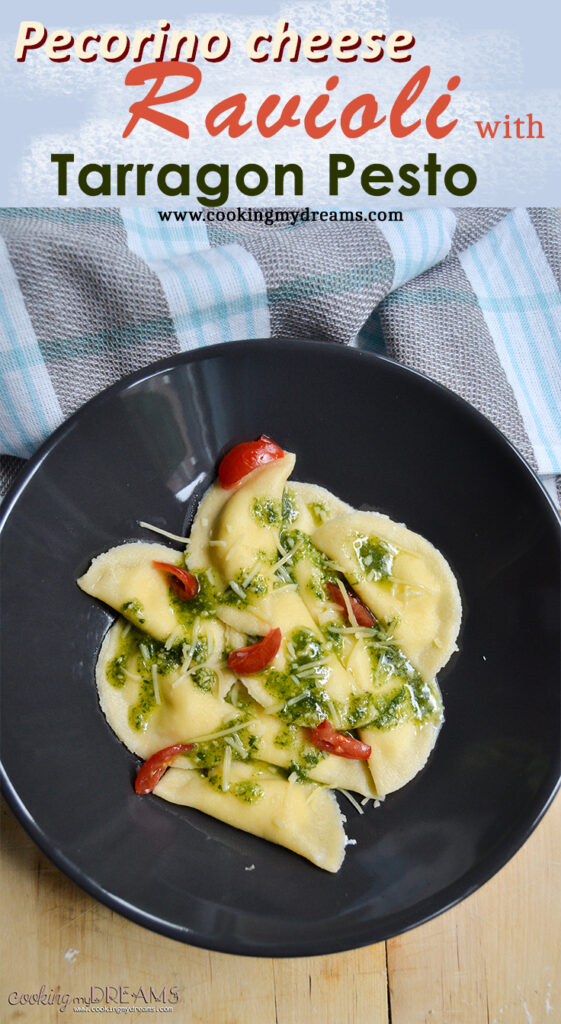
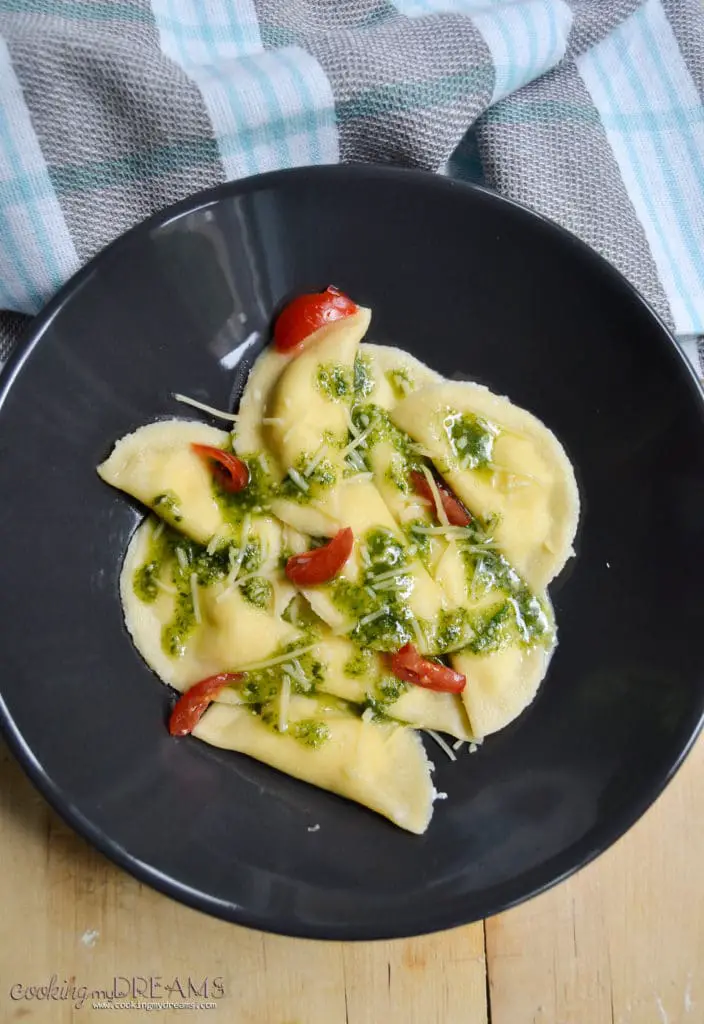
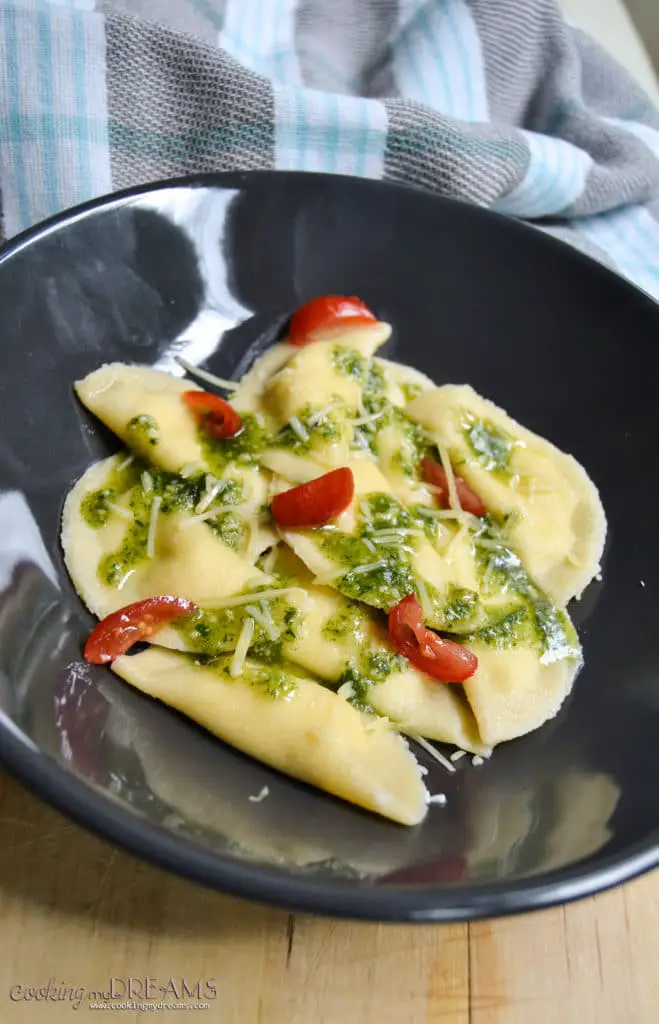
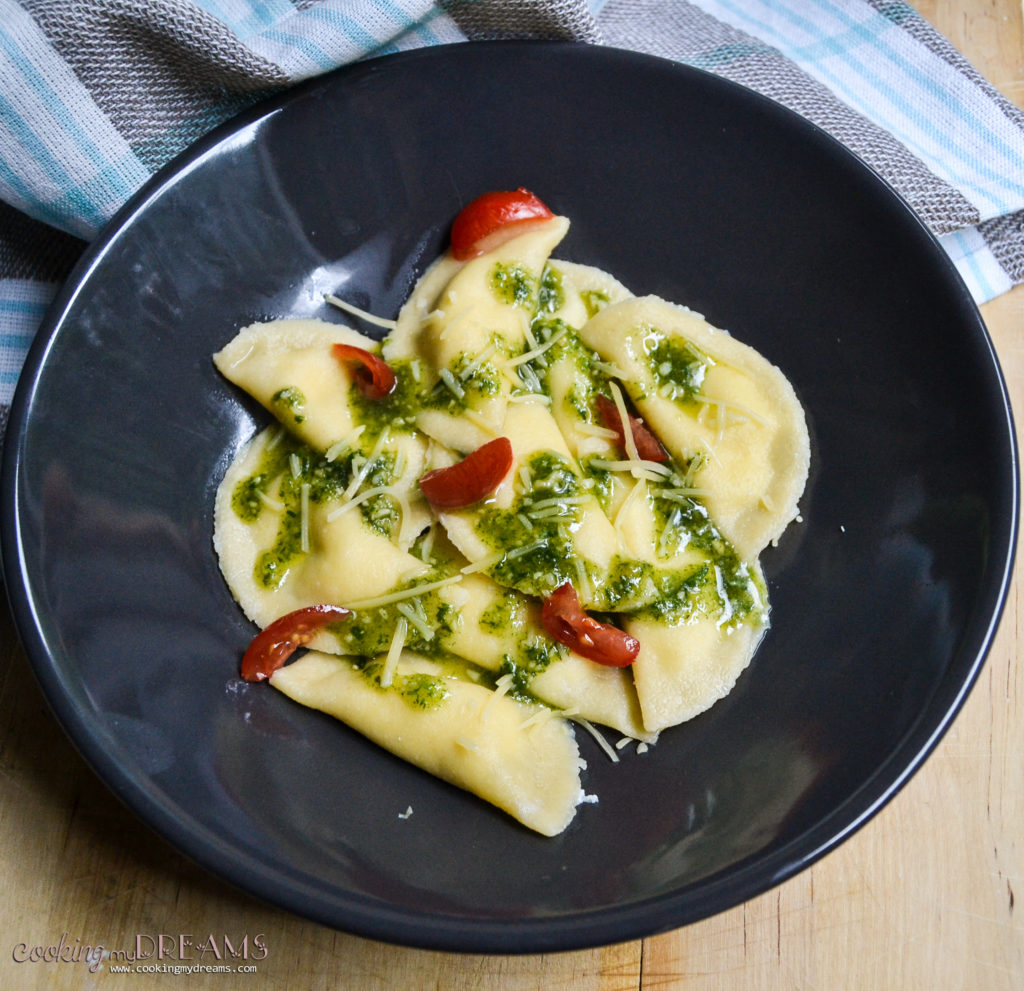
Creamy, sharp Pecorino cheese ravioli meets the bright, anise-kissed flavor of fresh tarragon pesto in this elegant yet easy dish. It's a bold twist on classic pesto pasta, perfect for spring or early summer when herbs are at their freshest.
What is Tarragon?
This post may contain affiliate links, which means I may make a small commission off items you purchase at no additional cost to you.
Tarragon is a wild herb with long, thin, bright green leaves which grows in most parts of Europe, Asia and North America.
Its flavour is really aromatic and slightly reminds of anise. It pairs well with chicken, fish, eggs and practically everything else. It's one of the four "fines herbes" used in French cooking and you may know it as one of the main ingredients of the Béarnaise sauce.
It's so flavorful and unique that the famous chef James Beard said:
I believe that if ever I had to practice cannibalism, I might manage if there were enough tarragon around.
James Beard
What is Pecorino Cheese?
The true Tuscan appetizer plate can never miss some Pecorino cheese in different aged varieties.
Pecorino is made from sheep's milk and from this derive its name (sheep in Italian is "Pecora" so Pecor-ino). There are many different types of Pecorino in every Italian region and they all have different flavours due to the different aging process and seasoning. Pecorino Romano is probably the most famous globally and it's mostly consumed aged and grated on pasta (check this guide on 10 Best Substitutes for Romano Cheese). The Tuscan one is quite mild, not too salty.
Here you can buy the semi-aged Pecorino, similar to what I used for this recipe, and check out also these guides on How to Make an Italian Cheese Board (Tagliere di Formaggi) and How to craft a Tuscan Tagliere (Cheese and Charcuterie Board).
Substitutions and Variations
- Tarragon → Try a mix of basil and parsley if tarragon is unavailable, though the flavor will be different. Check out also this post on Best Substitutes for Tarragon.
- Ravioli → Use ricotta and spinach ravioli or plain cheese ravioli as a substitute.
- Pine nuts → Walnuts, almonds, or sunflower seeds can replace them.
- Pecorino → Swap with Parmigiano Reggiano for a slightly milder, nuttier taste.
- Add greens - Toss in a handful of sautéed spinach or arugula for extra texture.
- Spicy twist - Add a pinch of crushed red pepper to the pesto for gentle heat.
- Creamy pesto - Blend in a spoonful of ricotta or a splash of cream for a richer sauce.
- Crispy topping - Finish with fried sage leaves or a sprinkling of toasted breadcrumbs.
Storage and Reheating
Fridge: Store leftover ravioli and pesto separately in airtight containers for up to 2 days.
Freezer: Tarragon pesto can be frozen in small containers or ice cube trays for up to 3 months.
Reheating: Reheat pasta gently in a pan with a splash of water or broth. Stir in the pesto just before serving-avoid heating it too much to preserve its fresh flavor.
💭 Recipe FAQs
Yes! The pesto can be made up to 3 days in advance and stored in the fridge with a layer of olive oil on top to prevent browning.
Fresh is highly recommended for this recipe. Dried tarragon is not recommended as it won't deliver the same vibrant flavor.
Yes-grilled chicken or sautéed shrimp pair nicely if you want to make it more filling.
If you like this recipe, check also these other Ravioli recipes:
🫶 Related recipes you might like
Looking for other recipes like this? Try these:
If you tried this recipe, please take a moment to rate it and share your thoughts in the comments. Your feedback means a lot to me! ★★★★★
📖 RECIPE
Ingredients
Method
- Start by making the pasta dough, mixing the flours with a pinch of salt in a large bowl or a large wooden cutting board. Make a hole in the center and drop the 2 eggs. Start whisking the eggs with a fork until it's too thick to whisk, then start kneading the dough with your hands and add more flour until you get a soft, elastic ball of dough that it's no longer sticky.
- Cover the dough in plastic wrap and set aside to rest for about 15 minutes. Make the filling by mixing the ricotta, the Pecorino cheese and season with salt, pepper and nutmeg. Set aside.
- Now roll the pasta dough into thin sheets, add the filling with a teaspoon in a small ball, being careful to leave enough space between them to be able to cut them out easily.
- Brush with water on the edges around the filling, then cover with another sheet of pasta and tap with your fingers to close them, making sure all the air gets out too.
- Cut the ravioli with a cutter, then press again the edges to make sure they're well sealed. Set aside on a clean towel to rest.
- To make the tarragon pesto, put in a blender the tarragon leaves with the pine nuts, Pecorino cheese, salt, black pepper and slowly add olive oil until you get a creamy pesto sauce (not too thick, not too liquid).
- Bring a large pot of salted water to boil, then gently toss the ravioli one by one. Cook for 2-3 minutes, then gently drain and serve with the tarragon pesto, a few chopped cherry tomatoes and some freshly grated Pecorino cheese.
Nutrition
Nutritional information is only an estimate. The accuracy of the nutritional information for any recipe on this site is not guaranteed.
Notes
- Don't overcook ravioli - They are delicate and can break easily; cook just until they float.
- Toast your nuts - This small step adds depth to the pesto flavor.
- Taste and adjust - Tarragon can be strong, so start with less and add more to suit your taste.
- Reserve pasta water - A splash can help loosen the pesto and help it coat the ravioli evenly.
Leave a Comment