
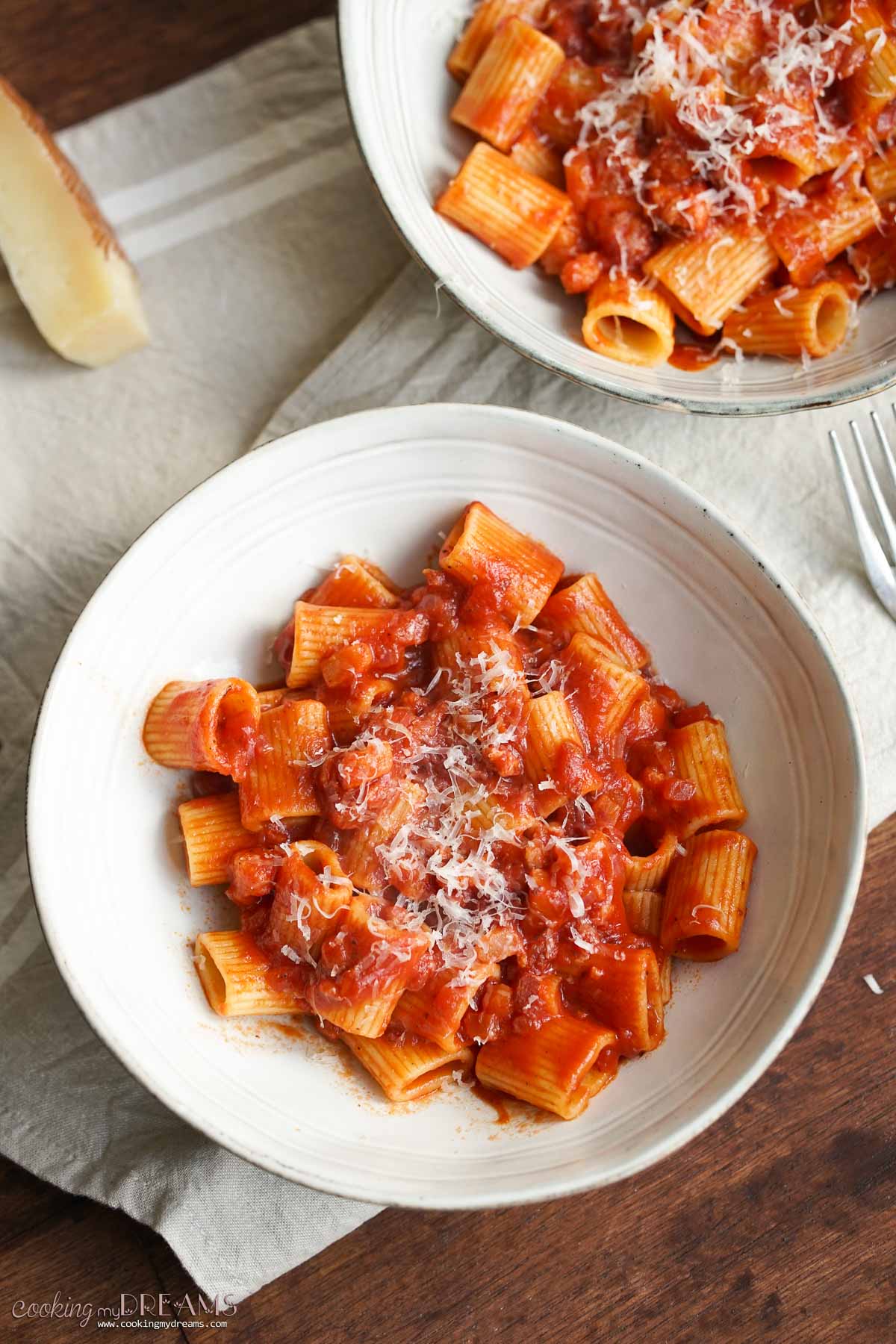
Rigatoni all'Amatriciana is one of the most iconic Roman pasta dishes, known for its bold, simple flavors and rich tradition. Made with crispy guanciale, tomato sauce, Pecorino Romano, and a touch of chili, this authentic recipe is a perfect example of how a few high-quality ingredients can create something unforgettable.
This post may contain affiliate links, which means I may make a small commission off items you purchase at no additional cost to you.
This Rigatoni Amatriciana recipe comes from the town of Amatrice in Lazio, central Italy, and has become a staple in Roman cuisine. While the ingredients are minimal, each one plays an essential role: the guanciale provides deep savory flavor, the tomatoes add acidity and sweetness, and the Pecorino ties everything together with its sharp, salty finish.
If you're looking for a truly authentic Italian pasta recipe that is both simple and full of character, this classic Amatriciana sauce is one you need to master.
For more classic Italian pasta recipes, check out this Penne all'Arrabbiata (Spicy Tomato Sauce), or these Pici Cacio e Pepe (Tuscan Pasta with Creamy Cheese and Black Pepper Sauce).
Jump to:
What Makes Amatriciana Pasta Authentic
Authentic pasta all'Amatriciana is rooted in tradition, and while variations exist, the classic version includes:
- Guanciale (not bacon or pancetta, though substitutions are common outside Italy)
- San Marzano tomato sauce
- Pecorino Romano cheese
- Chili pepper (optional but traditional in many versions)
Unlike other Italian sauces, there is no garlic, onion, or cream (though I personally like the addition of red onion to the sauce).
🧾 Ingredients (with Notes & Recommendations)
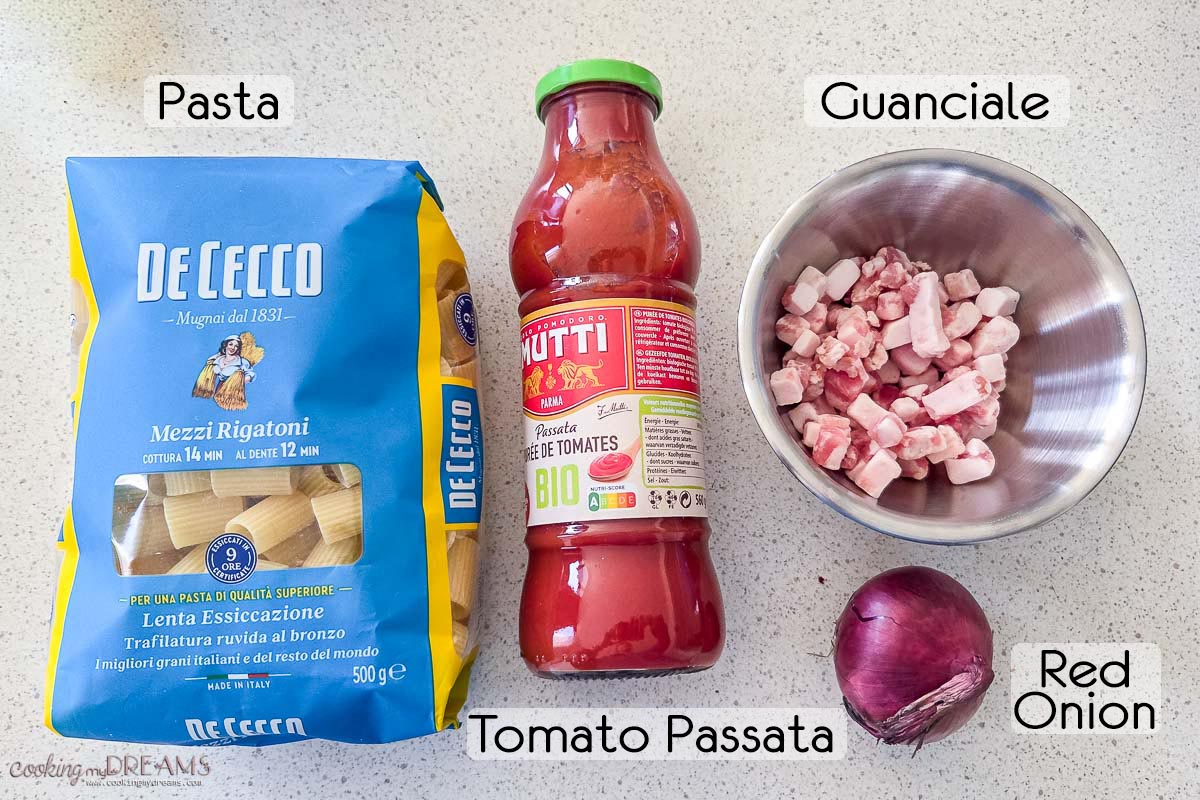
- Rigatoni Pasta - Rigatoni is perfect for this dish because its ridges and hollow shape hold the sauce beautifully. Traditionally, bucatini is also used.
- Guanciale - Cured pork cheek traditionally used in iconic pasta recipes like Carbonara or Gricia. It becomes crispy and releases flavorful fat when cooked. This is the key ingredient for authentic flavor.
- Tomato Passata or Crushed Tomatoes - Use high-quality San Marzano tomatoes for a balanced sauce that is neither too acidic nor too sweet.
- Pecorino Romano - A sharp, salty cheese that is essential to the dish. Always use freshly grated for best results.
- Chili Flakes (Peperoncino) - Adds a subtle heat that enhances the sauce without overpowering it.
- Salt & Black Pepper - Season carefully, as guanciale and Pecorino already add saltiness.
- Red Onion - Optional since it's not authentic, but I like finely minced red onion for extra flavor in the tomato sauce.
See the recipe card for quantities.
🍳 Substitutions
- Guanciale → Pancetta or Bacon: Not traditional, but commonly used outside Italy. Bacon adds a smokier flavor.
- Rigatoni → Bucatini or Spaghetti: Bucatini is a classic alternative, while spaghetti offers a lighter option.
- Pecorino Romano → Parmesan: Milder in flavor, but can be used if Pecorino is unavailable.
- Fresh Chili → Chili Flakes: Either works depending on availability.
🥣 Variations
- Bucatini all'Amatriciana - The most traditional pasta shape used in Rome.
- Less Spicy Version - Reduce or omit chili for a milder flavor.
- Extra Cheesy Version - Add more Pecorino for a richer, creamier texture.
- Rustic Style - Use crushed tomatoes for a slightly chunkier sauce.
📋 Instructions with Photos
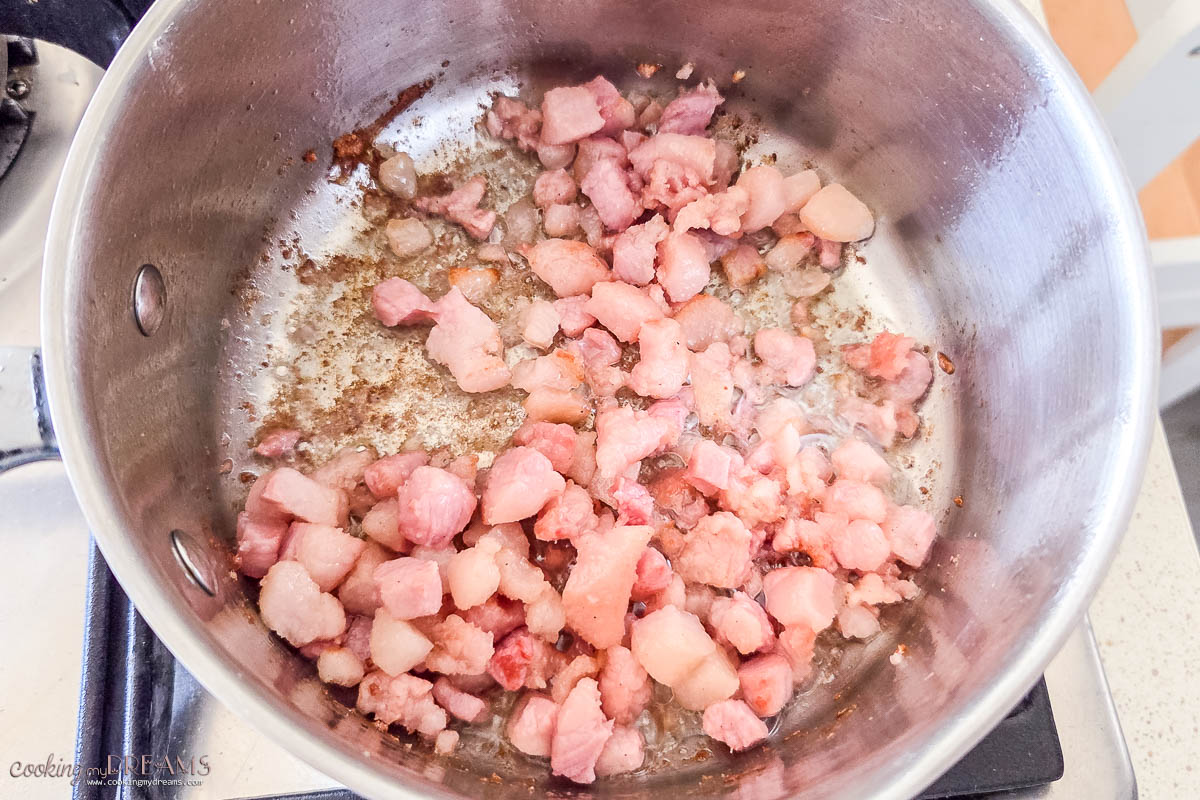
Step 1. Sautè the Guanciale in a medium pot until slightly brown and crispy.
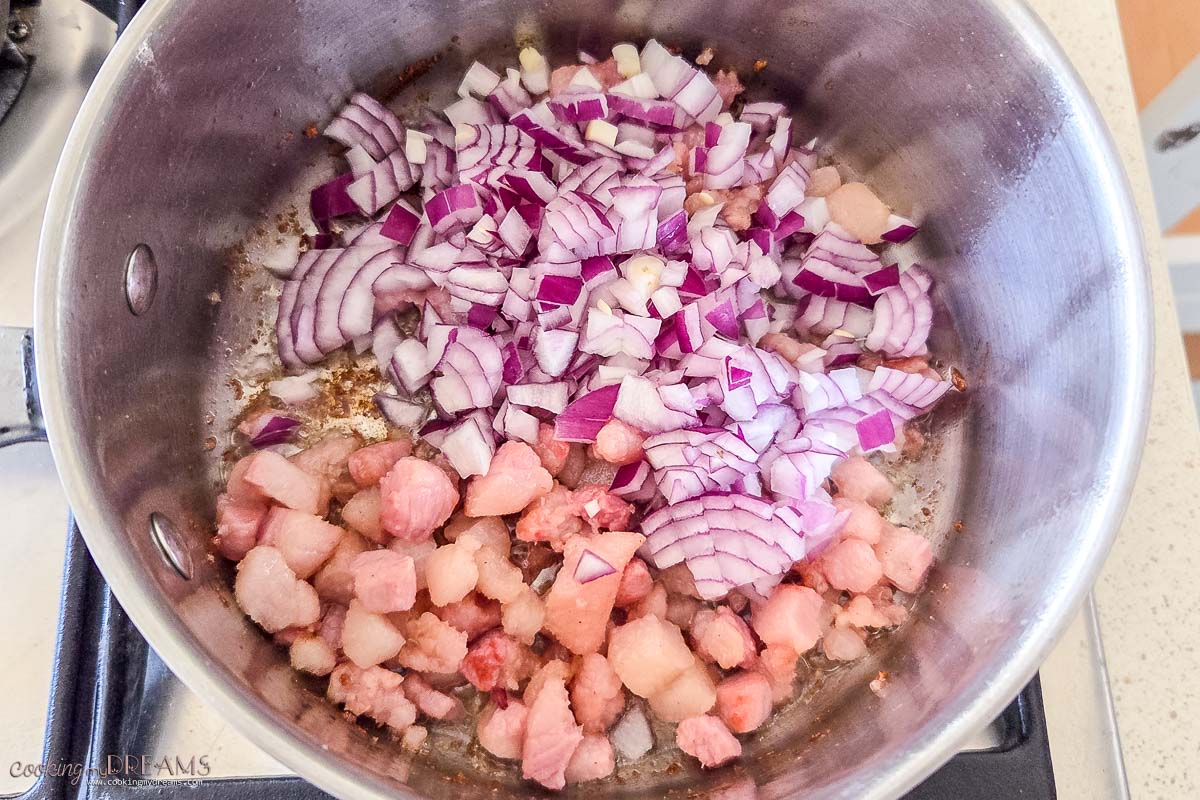
Step 2. Add the red onion (optional) and cook until translucent.
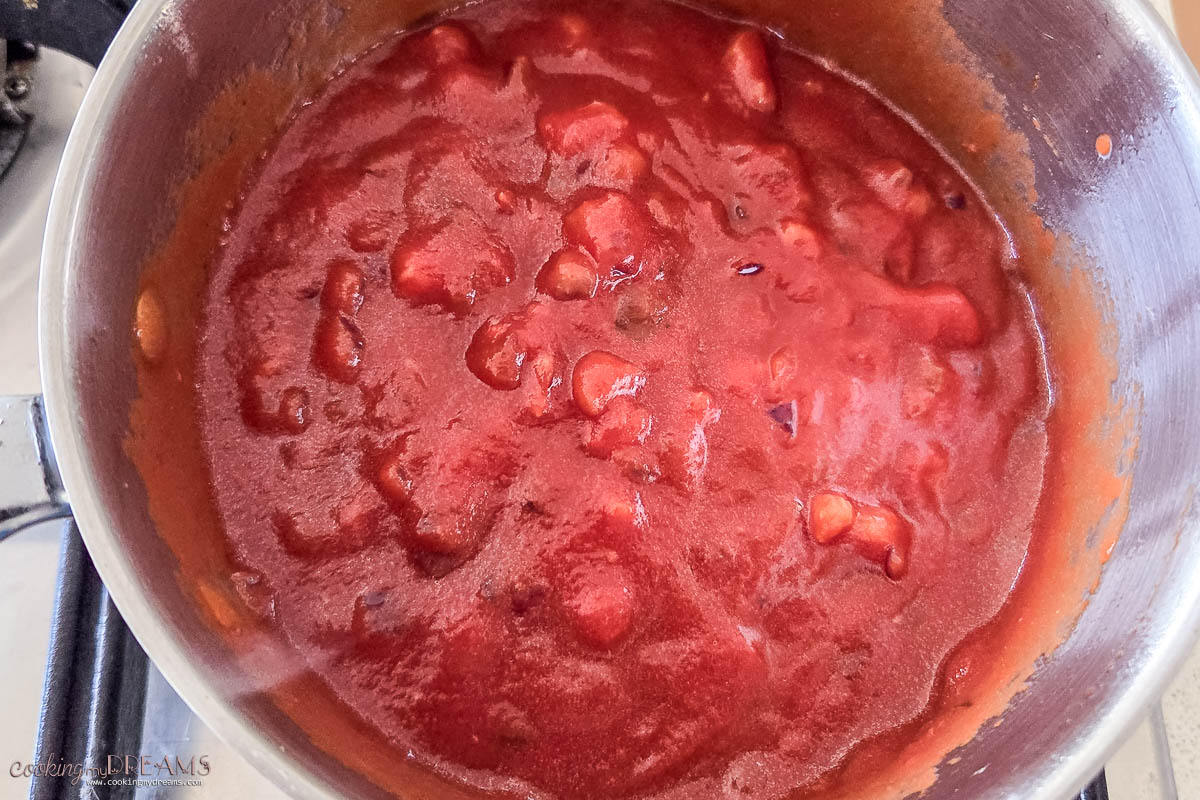
Step 3. Add the tomato puree and turn down the heat to simmer gently.
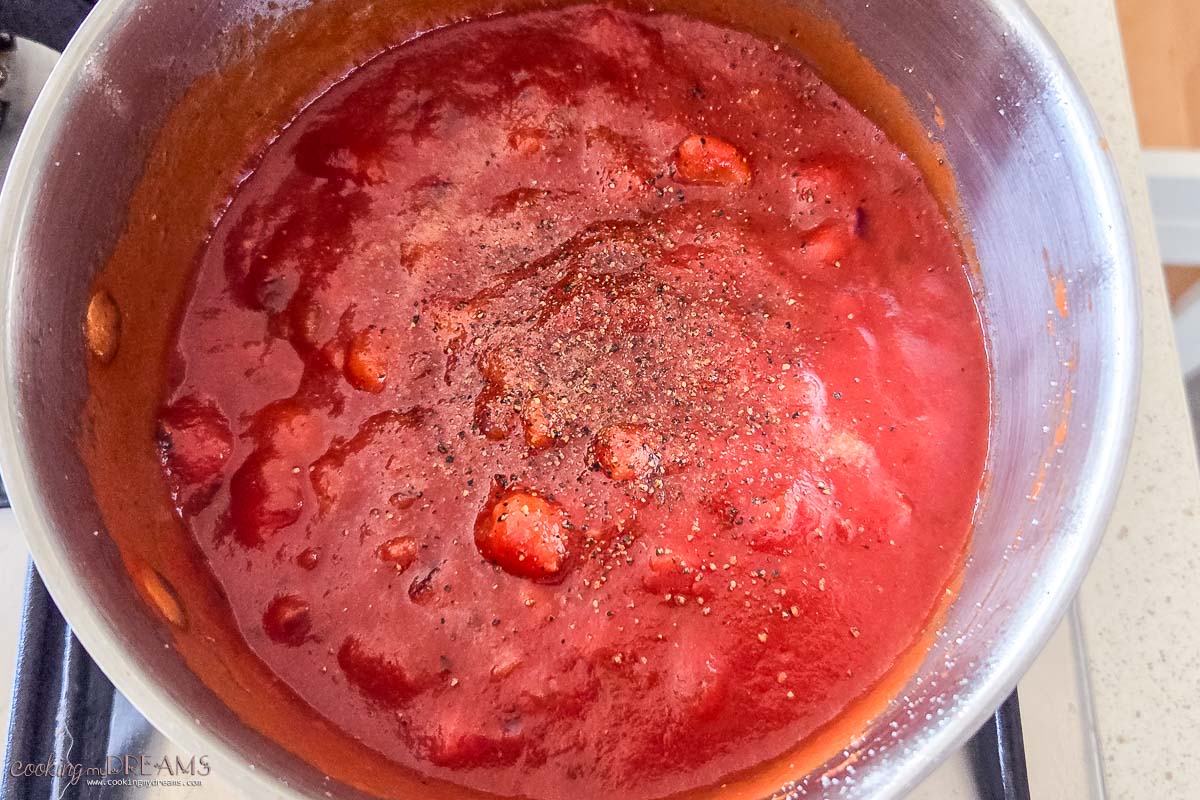
Step 4. Season the sauce to taste.
🍽 Serving Suggestions
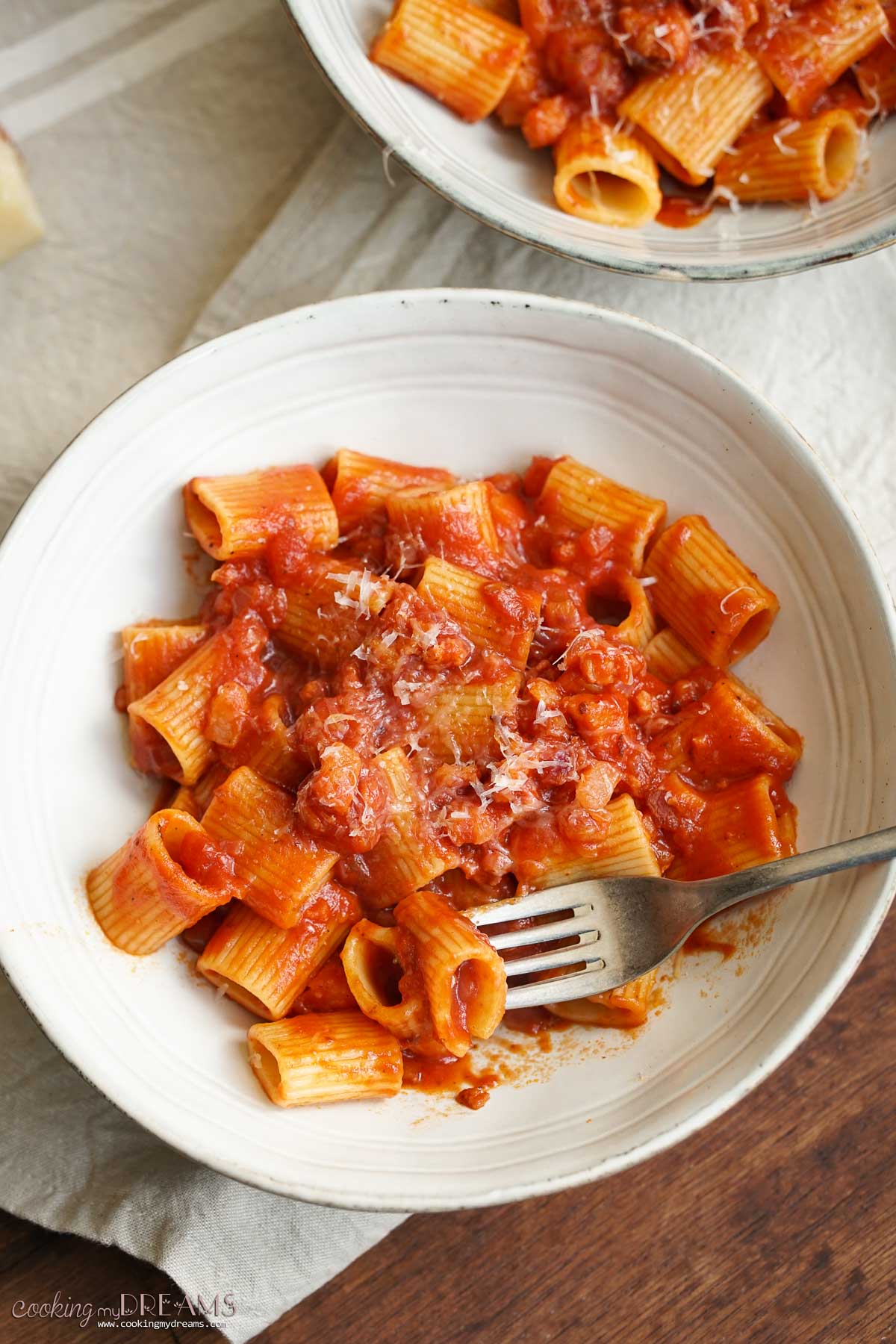
Serve this rigatoni all'Amatriciana immediately, while the pasta is hot and perfectly coated in the sauce. Finish with extra Pecorino Romano and freshly cracked black pepper for a classic Italian presentation.
It pairs beautifully with:
- A glass of red wine like Chianti or Montepulciano d'Abruzzo
- A simple green salad (not on the same plate, please)
- Crusty bread for soaking up the sauce
The Amatriciana pasta is perfect for both everyday meals and special occasions.
❄️ Storage & Reheating
Fridge: Store leftovers in an airtight container for up to 2-3 days.
Reheating: Reheat gently in a pan with a splash of water or broth to loosen the sauce.
Freezer: The sauce can be frozen separately for up to 3 months, but pasta is best cooked fresh.
💭 Recipe FAQs
If your guanciale is very fatty, you can drain half of the rendered fat before adding the tomatoes, but leave some fat to give flavor to the sauce.
Yes, although guanciale is traditional, you can use smoked pancetta or even bacon if needed. Just keep in mind that bacon adds a smoky flavor that slightly changes the character of the dish.
This usually comes from lower-quality tomatoes. Let the sauce simmer longer, or add a small pinch of sugar to balance the acidity.
⭐ Top tip
Let the guanciale cook slowly over medium heat instead of rushing it on high heat. This allows the fat to render properly and creates crispy pieces without burning, which is essential for building the deep, authentic flavor of Amatriciana.
🫶 Related recipes you might like
Looking for other recipes like this? Try these:
If you tried this recipe, please take a moment to rate it and share your thoughts in the comments. Your feedback means a lot to me! ★★★★★
📖 RECIPE
Ingredients
Method
- In a large skillet, cook the guanciale over medium heat until crispy and the fat has rendered. (Drain some of the fat if necessary, but not all)
- Add the minced onion if using, and cook until translucent.
- Pour in the tomato sauce and reduce the heat to simmer gently for about 20 minutes until slightly thickened.
- Season the sauce to taste with salt, abundant black pepper, and chili pepper flakes if using.
- Bring a large pot of salted water to a boil and cook the rigatoni until al dente. Reserve some pasta water, then drain.
- Add the cooked pasta to the sauce and toss to combine, adding a splash of pasta water if needed.
- Remove from heat and stir in grated Pecorino Romano.
- Serve immediately with extra cheese and black pepper.
Nutrition
Nutritional information is only an estimate. The accuracy of the nutritional information for any recipe on this site is not guaranteed.
Notes
- Cook the guanciale slowly to render the fat and develop flavor.
- Use high-quality tomatoes for the best flavor (less acidic).
- Red onion is not traditional in Amatriciana, but I like the addition. Omit if you want the authentic sauce.
Fred says
Hi Jess, I was a bit confused with the opening summary - mentioning Tonnarelli as traditional, and a picture of a larger diameter rigatoni. Tonnarelli, being a long, square-shaped pasta (aka square spaghetti), is not a short tube shape.
I do agree that the Amatriciana sauce is versatile and works well with many types of pasta. Traditionally served with bucatini, and often other long thicker shapes.
Now to give the recipe a try - looks pretty good and straightforward. Plus, I just acquired a bit of guanciale, and this will put it to good use.
Jessica Montanelli says
Hi Fred, I'm not sure why you saw Tonnarelli mentioned since they're not mentioned in this recipe. Perhaps it was a glitch somewhere with my Tonnarelli al Pesto recipe. 🙂 I hope you liked the recipe nethertheless!