
Authentic Basil Pesto-or Pesto alla Genovese-is one of Italy's most iconic pasta sauces. Made with just a handful of ingredients, this bright green sauce comes from the Ligurian region and is traditionally prepared with a mortar and pestle. It's fresh, raw, and completely uncooked, which helps preserve the bold taste of the basil and the richness of the olive oil and cheese.

This post may contain affiliate links, which means I may make a small commission off items you purchase at no additional cost to you.
Whether you toss it with pasta, drizzle it over grilled vegetables, or spread it on crusty bread, this classic pesto brings a taste of Italy to every bite.
Check out these traditional pasta recipes using Pesto: Trofie al Pesto (Trofie Pasta with Basil Pesto) and Trenette al Pesto (with Green Beans and Potatoes). Check out also these 20+ Easy and Creative Recipes with Basil Pesto.
Jump to:
The Tradition of Basil Pesto
Pesto is not from Tuscany - where I come from - but from Liguria, our neighboring region. More precisely from the city of Genoa where it gets its full name Pesto alla Genovese.
Unlike most regional food in Italy, Pesto Genovese is well known and appreciated throughout the whole Country. And, of course, worldwide.
Traditionally, Pesto is made with mortar and pestle (from which the name is derived). In our modern and frantic age, however, it is more commonly made with a food processor. The ingredients are always the same: Basil, Salt, Pine Nuts, Parmigiano Reggiano cheese, Olive oil, and Garlic. Only the latter is optional, for the people who hate garlic.
🧾 Ingredients

- Fresh Basil Leaves - Use young, sweet Genovese basil if possible. Avoid bitter or overly mature leaves.
- Garlic - Just one small clove adds depth without overpowering.
- Pine Nuts - Toast lightly for extra flavor, but traditional pesto uses raw pine nuts.
- Parmigiano Reggiano - Adds nuttiness and umami; grate it fresh for the best texture.
- Pecorino Romano - A touch of this salty, sharp cheese balances the flavors beautifully.
- Extra Virgin Olive Oil - Use a mild, fruity Italian olive oil to avoid bitterness.
- Coarse Sea Salt - Enhances and brings out the flavors of each ingredient.
See the recipe card for quantities.
🥣 Variations
- Lemon: Add a splash of lemon juice or zest for brightness and a hint of acidity. It helps keep the pesto green and adds a fresh zing.
- Creamy: Stir in a spoonful of heavy cream, mascarpone, cream cheese, or ricotta for a milder, creamy version that's great on pizza or as a spread.
- Vegan: Omit the cheese and use nutritional yeast for a cheesy flavor. Use more nuts to help thicken the sauce naturally.
- Nut-Free: Replace pine nuts with sunflower seeds or simply skip them. You can also try breadcrumbs for body.
- Other Greens: Substitute or combine basil with arugula, spinach, parsley, or kale (like in this Cavolo Nero Pesto). It gives a slightly different flavor but still works beautifully as a pesto base.
📋 Instructions with Photos
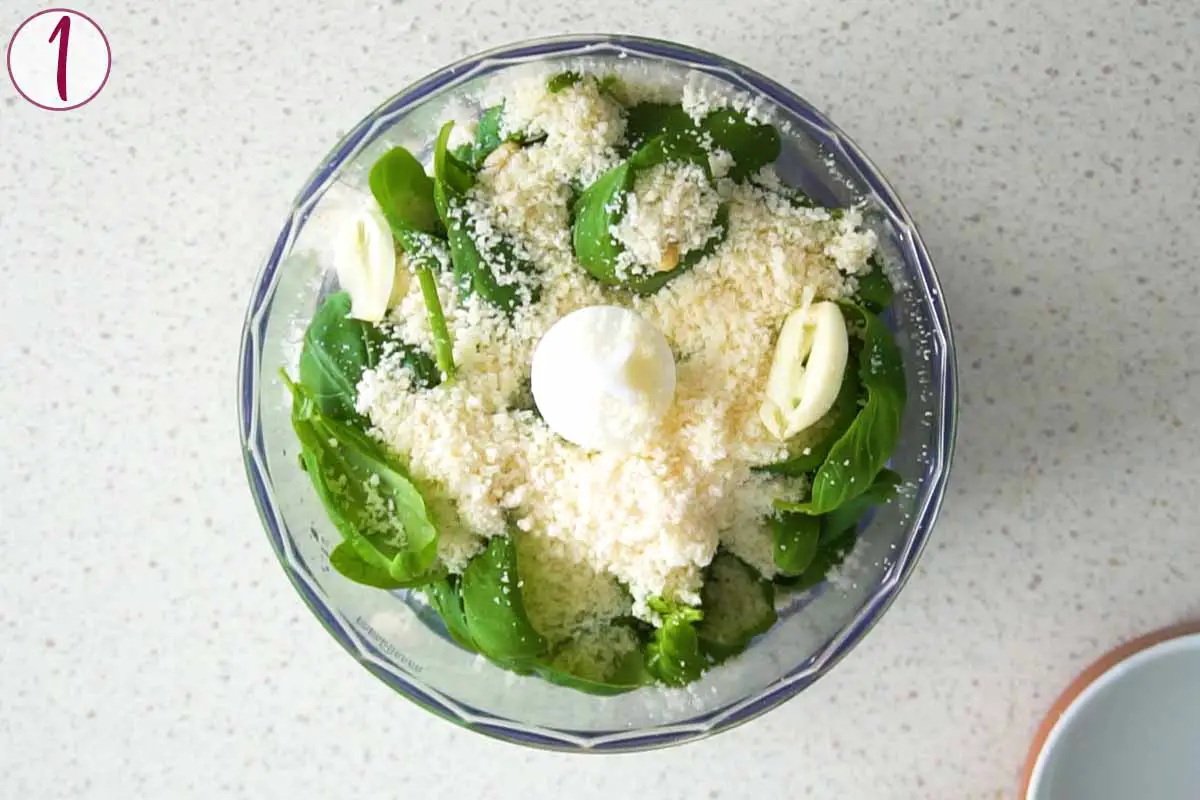
Step 1. Add all the ingredient into the food processor and pulse for about a minute until is finely ground.
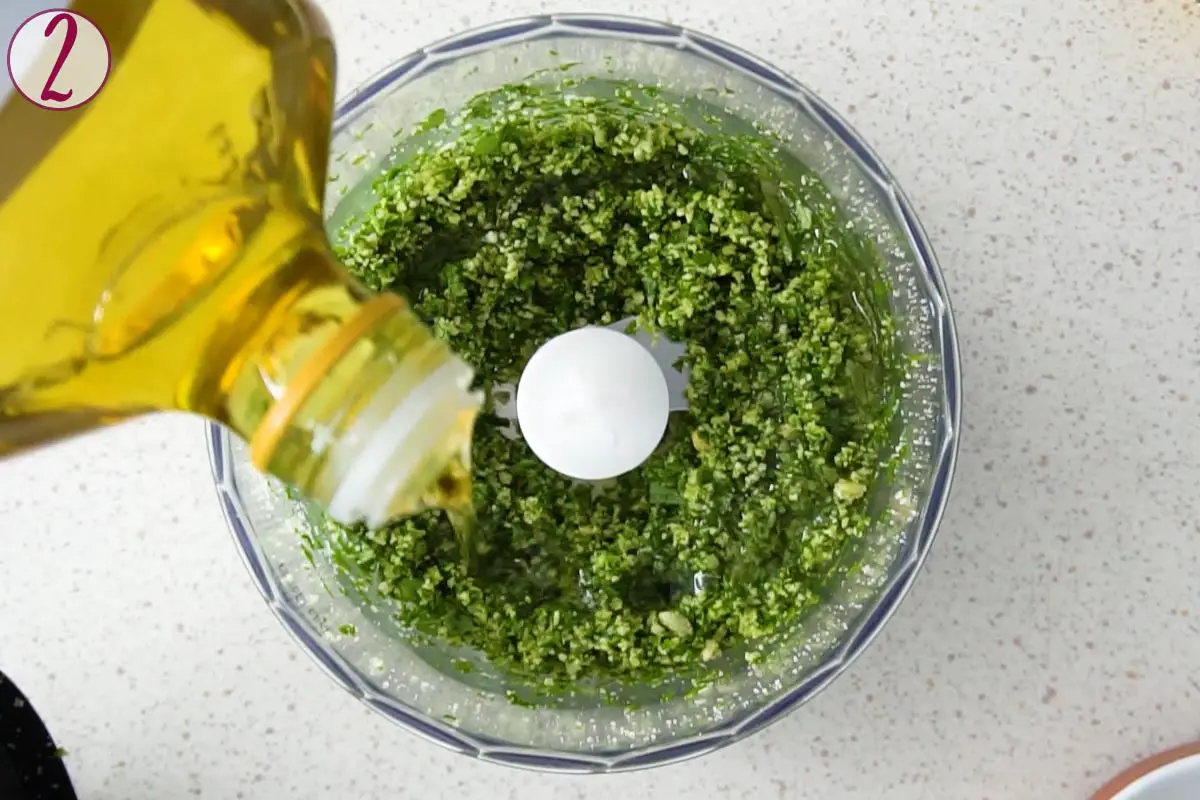
Step 2. Add a drizzle of olive oil and keep pulsing until you reach the desired consistency.

🍝 How to Use Basil Pesto
Basil pesto is incredibly versatile and can be used in many ways:
- Tossed with trofie or trenette pasta (traditional Ligurian pairings)
- Spread on bruschetta or sandwiches
- Swirled into soups or risottos
- Drizzled over grilled chicken, fish, or vegetables
- Mixed into salad dressings or used as a dip
Tip: When serving with pasta, always save a little pasta water to loosen the pesto and help it coat the pasta evenly.
🔪 Equipment
Using a mortar and pestle is the traditional and most authentic way to make pesto. The slow crushing of the ingredients allows basil to release its essential oils without oxidizing, keeping the sauce vibrant and aromatic. The texture is slightly coarse, rich, and complex.
A food processor is the quicker, easier option. It produces a smooth, creamy pesto in seconds. However, the blades can generate heat that dulls the color and slightly alters the taste.
❄️ Storage & Reheating
Fridge: Store pesto in a small airtight jar or container with a thin layer of olive oil on top to prevent oxidation. It lasts for up to 5 days.
Freezer: Pesto freezes beautifully! Spoon into an ice cube tray, freeze, then store cubes in a zip bag for up to 3 months. Thaw in the fridge and stir well before using.
💭 Recipe FAQs
No, a food processor works just fine for convenience-but traditional pesto made by hand has a more delicate texture and less bitterness.
It's best not to cook pesto, as heat dulls the flavor and color. Add it to warm pasta or dishes just before serving.
Yes! Use a vegan Parmesan substitute or skip the cheese and add a squeeze of lemon for brightness.
Yes, the pesto itself is naturally gluten-free. Just pair it with gluten-free pasta if needed.
⭐ Top tip
To keep your pesto vibrant green, blanch the basil leaves for 5 seconds in boiling water, then immediately cool them in ice water. Dry thoroughly before blending. This optional step helps preserve color without sacrificing flavor.

🫶 Related recipes you might like
Looking for other recipes like this? Try these:
If you tried this recipe, please take a moment to rate it and share your thoughts in the comments. Your feedback means a lot to me! ★★★★★
📖 RECIPE
Ingredients
Equipment
Method
- If you're using pestle and mortar, start by crushing the garlic, then add the basil and grind until the leaves are completely crushed. Add the pine nuts and cheese and then continue grinding while adding the olive oil little by little until you get the right consistency.
- If you're using a food processor, add all the ingredients together and give it a couple of pulses, then start adding the oil little by little in a thin stream and keep blending until it becomes creamy and lighter in color.
- Adjust with salt and add more cheese or pine nuts to your taste.
- NOTE: You shouldn't blend more than a couple of minutes, otherwise the pesto will heat up and the basil leaves will oxidize.
Nutrition
Nutritional information is only an estimate. The accuracy of the nutritional information for any recipe on this site is not guaranteed.
C.R. says
I love homemade pesto to add on pasta, focaccia, chicken. This was just perfect and I can't wait to make it again
Jessica Montanelli says
Thank you so much! I'm glad you liked it. 🙂