
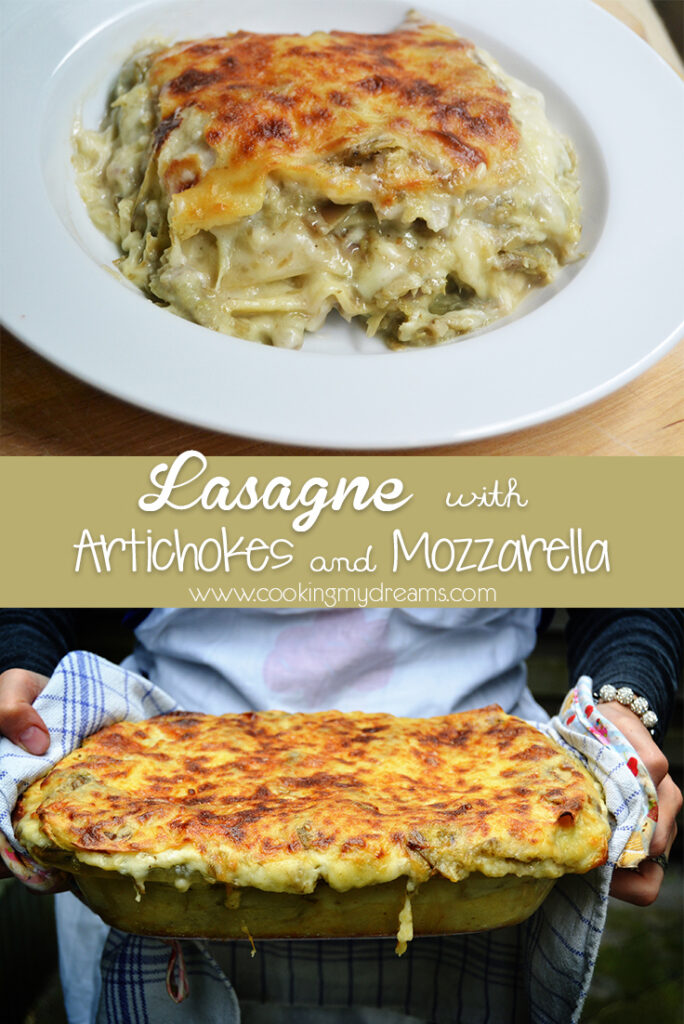
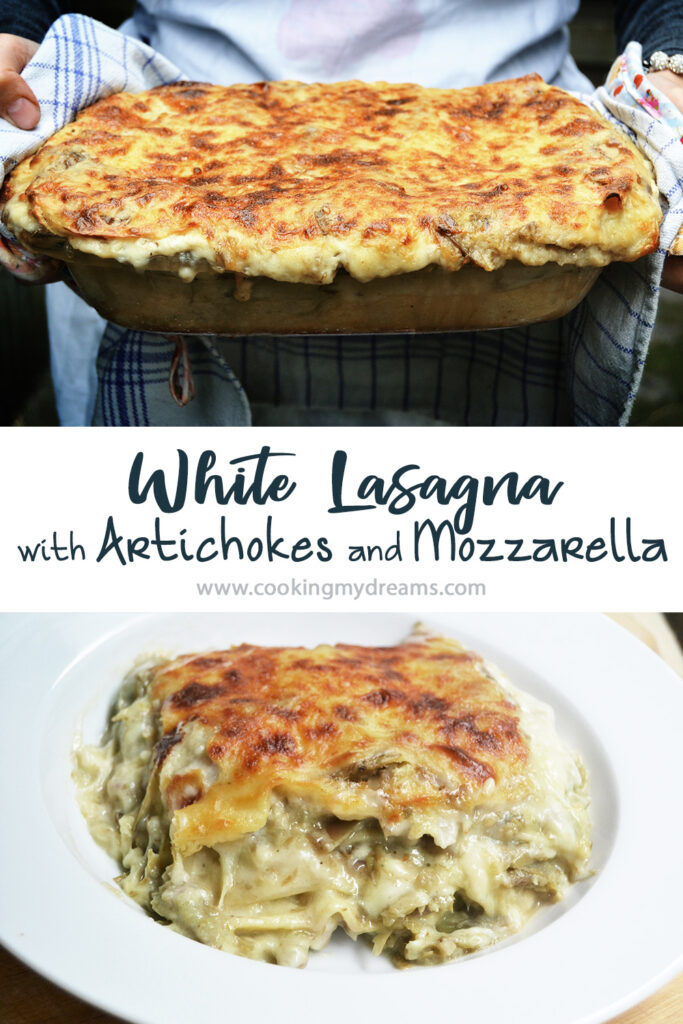
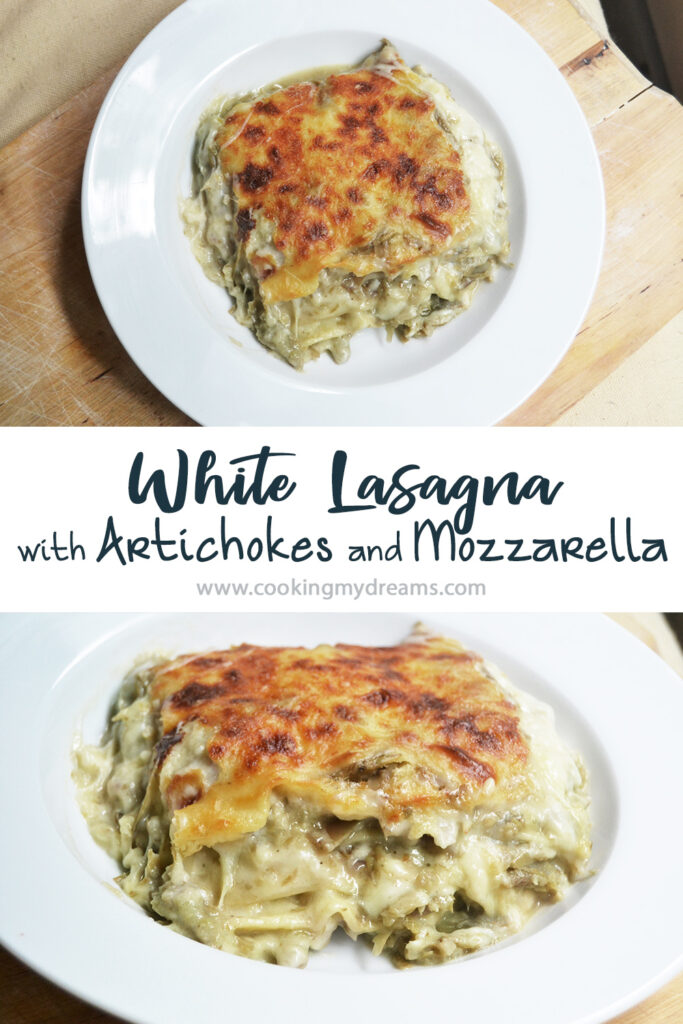
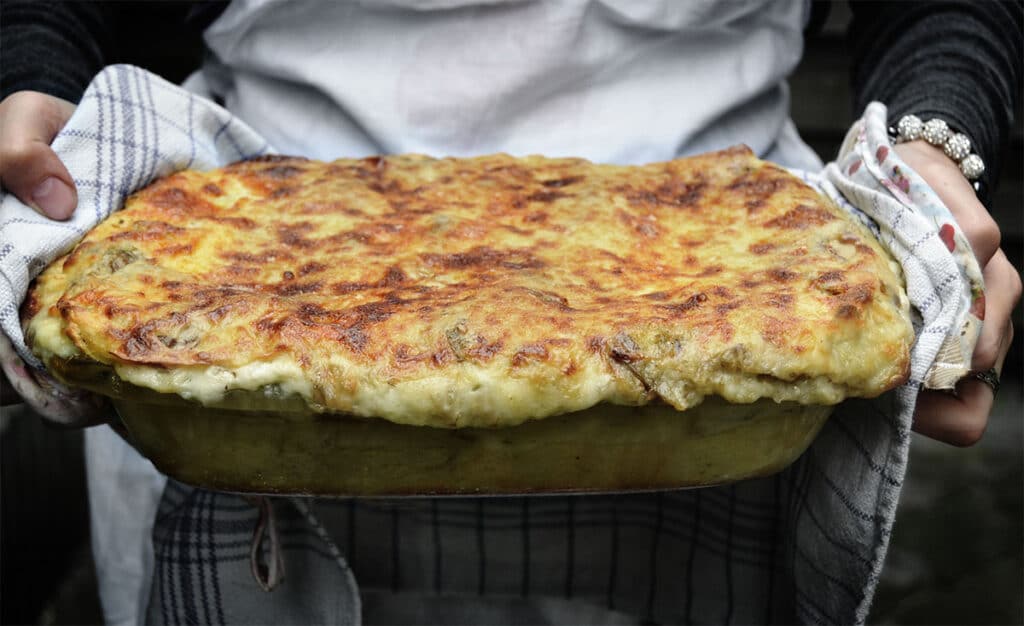
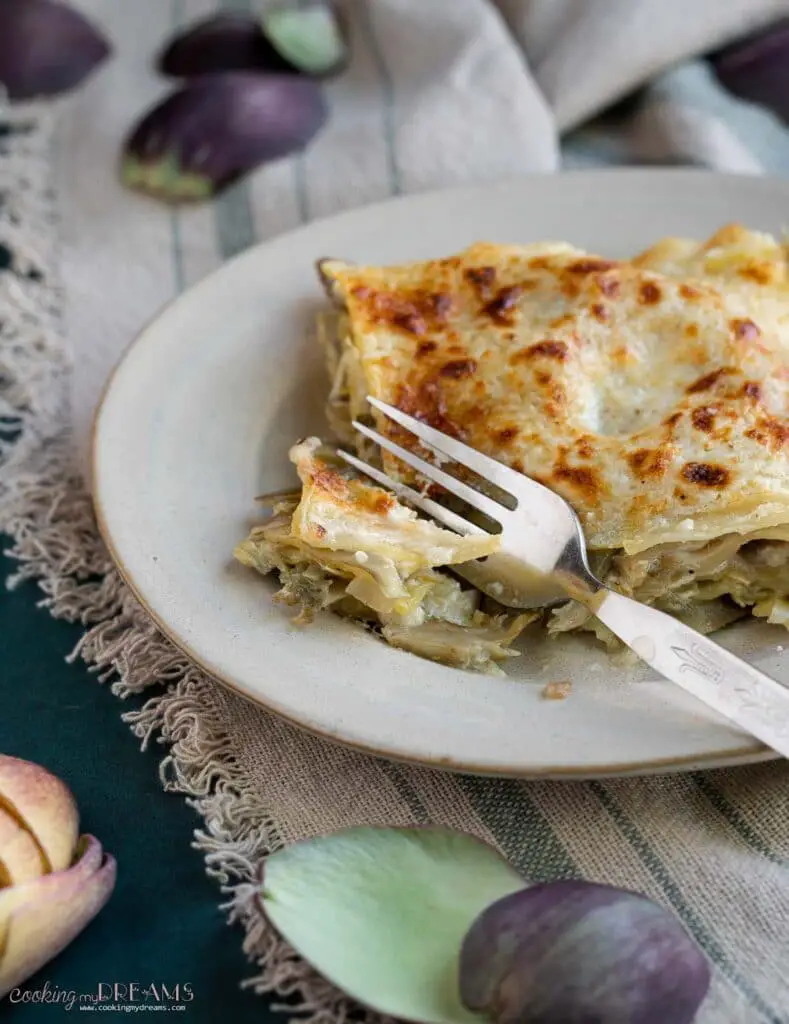
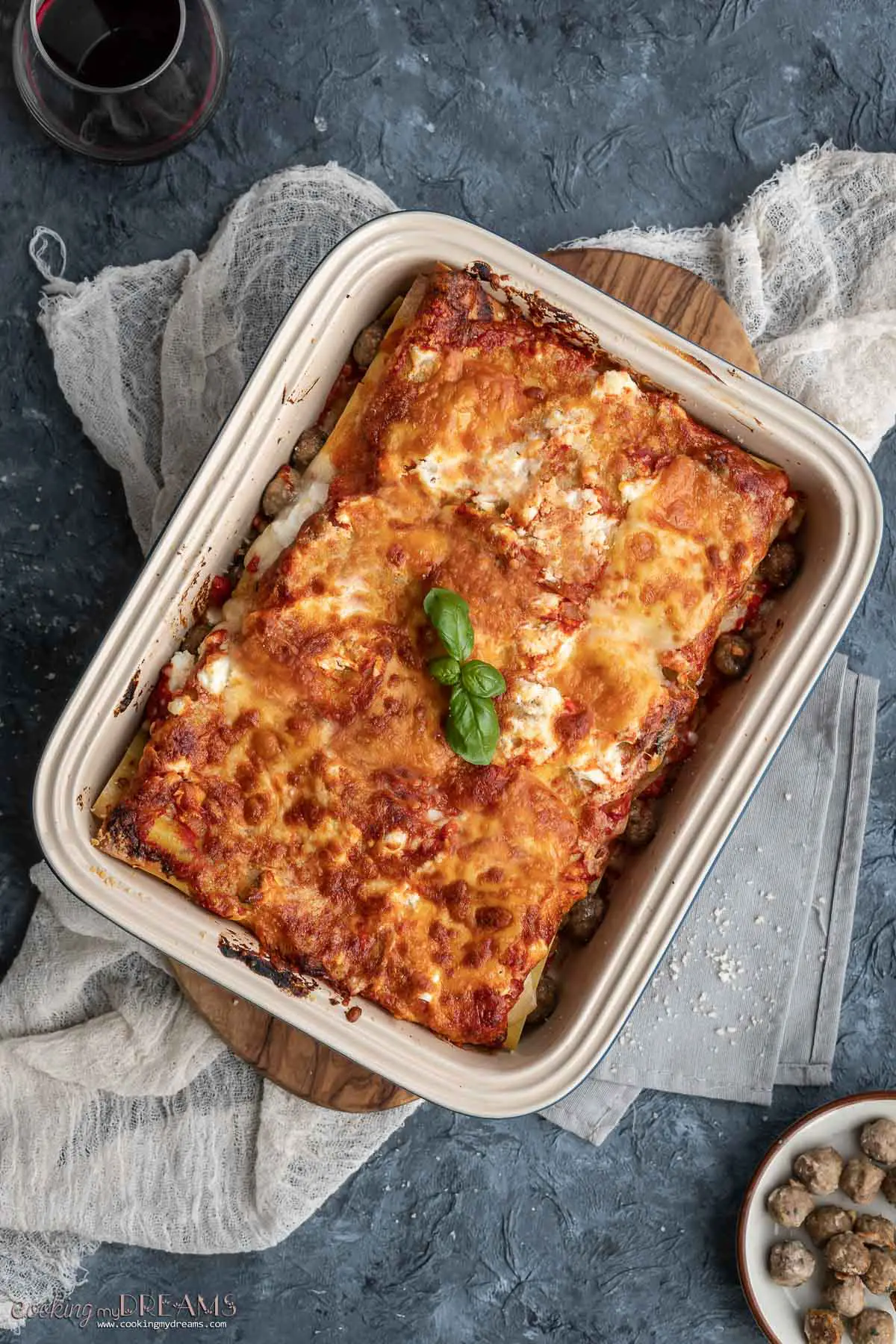
A white Artichoke Lasagna with a creamy cheesy filling of flavorful sautèed artichoke hearts and melted Mozzarella cheese. This is what comfort food is all about. A hot plate of cheesy goodness with a crispy Parmigiano crust.

This post may contain affiliate links, which means I may make a small commission off items you purchase at no additional cost to you.
There's no way to get Lasagna wrong, no matter what filling you decide to choose. In my family, the classic Lasagna with Tuscan Ragù and Béchamel sauce was a must of almost every Sunday lunch. Try also this Butternut Squash Lasagna with Italian Sausage and this Spinach & Ham Lasagna Roll Ups
Jump to:
How to clean artichokes
One of the worst sides of artichokes is the cleaning part. It's very messy and tough, but necessary. If you want to skip these steps I suggest you buy only fresh artichoke hearts if you find them available, or you can also try canned artichokes. Although they're not as flavorful as fresh ones so I don't recommend them.
Also, for this artichoke lasagna, I recommend the smaller elongated artichokes (also called baby artichokes) instead of the large round ones.
- Fill a bowl with cold water and lemon juice. Rub also lemon juice on your hands to prevent staining.
- Remove 2-3 rows of outer leaves from the bottom, they're usually too hard to eat.
- With a knife, peel the bottom parts where you remove the leaves, to keep only the flesh.
- Cut off about 1 inch (3 cm) of the top. If the artichokes are big, also cut off the tips of the remaining leaves as they're sharp.
- Cut the artichokes in half and with a teaspoon remove the fuzzy center until only the meat remains.
- Put the artichoke hearts in the bowl to prevent browning until it's time to cook them.
For more detailed steps, check out this video on how to clean artichokes.
🔄 Substitutions
- Béchamel → Replace with a mix of ricotta and cream if preferred.
- Artichokes → Try thinly sliced zucchini or spinach for a different vegetable version.
- Mozzarella → Use fontina or provolone for a richer, meltier variation.
- Parmesan → Pecorino Romano adds more salt and sharpness.
🧀 Variations
- Add mushrooms - Sauté sliced mushrooms with the artichokes for extra earthiness. Similar to this White Lasagna with Wild Mushroom and Zucchini
- Lemon zest - Stir into the béchamel or artichokes for a bright, fresh flavor.
- Herbs - Add fresh thyme, basil, or parsley for an herbal note.
- Crunchy topping - Finish with toasted breadcrumbs or extra Parmesan for a golden crust.
🧊 Storage & Reheating
Fridge: Store leftovers in an airtight container for up to 3-4 days.
Freezer: Freeze the fully baked and cooled lasagna (whole or in portions) for up to 2 months. Wrap well to prevent freezer burn.
Reheating: Reheat in the oven at 175°C / 350°F until hot throughout (cover with foil if needed). Microwave individual slices on medium heat until warmed through.
FAQ & Tips
You can use canned artichokes hearts brined in salted water (not jarred artichokes in olive oil or vinegar which would be too strong). But the flavor is much more faint than fresh artichokes. You can follow the same cooking instructions in the recipe, although you can cut the sautè time to a few minutes.
I never boil my pasta (either fresh or dried) when I make Lasagna. I always Add the raw pasta layers and make sure I add A LOT of sauce in between layers, so the liquid will cook the pasta in the oven.
Of course you can customize as you prefer, keeping in mind that not all veggies pair well together though. We all know spinach and artichokes are a perfect combo so they would be a great addition. Leeks, onions, potatoes, and mushrooms are also good pairings.
Related Recipes
If you want to try more recipes with artichokes, check out these recipes:
- Italian Artichoke Dip
- Mashed Potato Gratin with Artichokes and Mozzarella
- Italian Shaved Artichoke Salad
If you tried this recipe, please take a moment to rate it and share your thoughts in the comments. Your feedback means a lot to me! ★★★★★
📖 RECIPE
Ingredients
Method
- If you decide to make fresh pasta, mix the flours with the eggs and add a pinch of salt. Knead the dough until you get a firm and smooth ball. Cover in wrap and set aside to rest for 10-15 minutes.
- While the pasta rests, clean properly the artichokes and cut into thin slices, then put them in a bowl of water mixed with lemon juice so they don't oxidate and turn brown.
- Now go back to the pasta and with a rolling pin or a pasta machine stretch the dough into a thin sheet and cut into large squares or rectangles (depending on your baking pan shape). Then set the pasta sheets on a clean towel to rest while you prepare the filling.
- Drizzle a large pan with olive oil, then finely chop the shallot and fry until it starts to brown. Add the drained artichokes and fry at medium heat for about 5 minutes. Add the glass of wine and let the alcohol evaporate, then cover the pan with the lid and cook for another 5-10 minutes or until the artichokes become soft. If the pan is too dry, you can add some water until they finish to cook.
- While the artichokes cook, you can prepare the béchamel sauce. Warm up the milk in the microwave or in the stove (do not bring it to boil, it just needs to be warm), keep it warm while in a large pan you melt the butter at low heat and add the flour. Then mix quickly with a whisk so the flour doesn't make lumps. When they are fully blended into a creamy mixture, slowly add the milk and keep whisking until the butter and flour mixture melt into the milk.
- When you've added all the milk, keep mixing at low heat until the béchamel starts to boil and it will quickly become a creamy sauce. When you see that it's dense enough, turn off the heat and season with salt, pepper and ground nutmeg. Set aside.
- Start with a thin layer of béchamel on the bottom of the baking pan, then add a layer of pasta sheets, the artichokes, the mozzarella, then cover with another layer of béchamel sauce, sprinkle with Parmigiano cheese and then repeat again from the beginning until you fill up the whole baking pan (you should make at least 4-5 layers). In the last layer, finish with the béchamel and a thick layer of Parmigiano cheese so you will get a nice crispy crust.
- Bake for 45 minutes at 180°C (350°F) or until the top will be golden brown. Serve hot.
Nutrition
Nutritional information is only an estimate. The accuracy of the nutritional information for any recipe on this site is not guaranteed.
Leave a Comment