
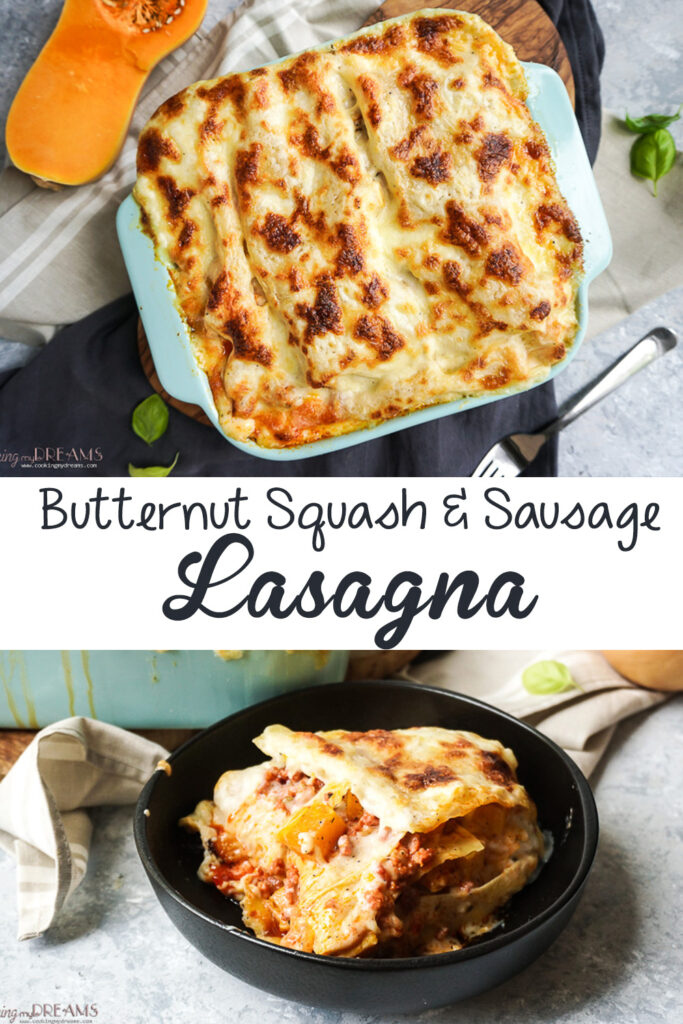
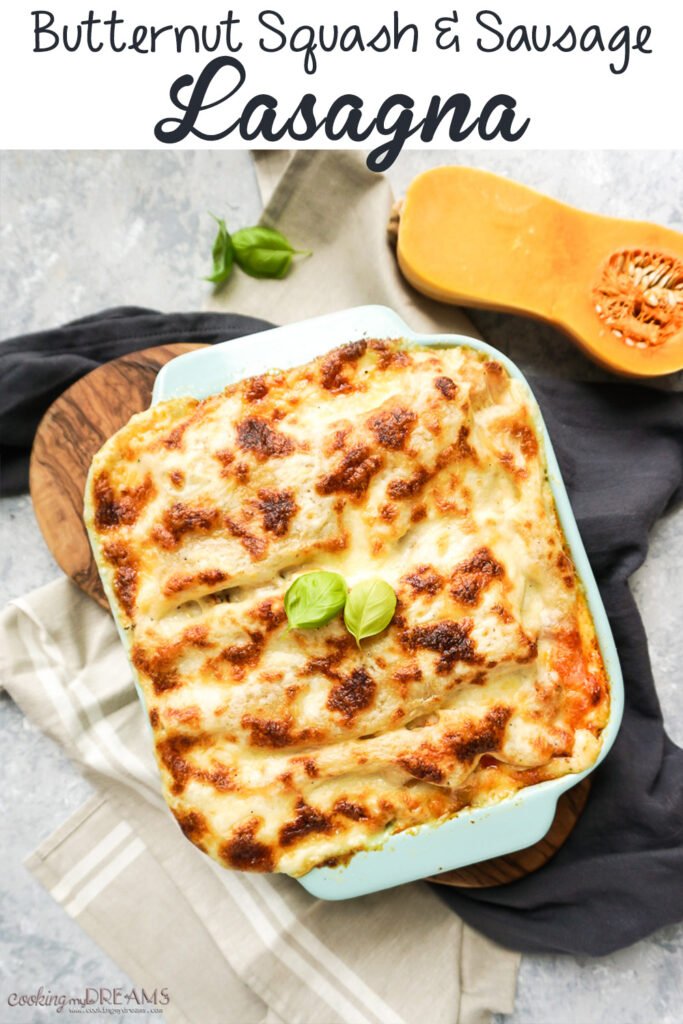
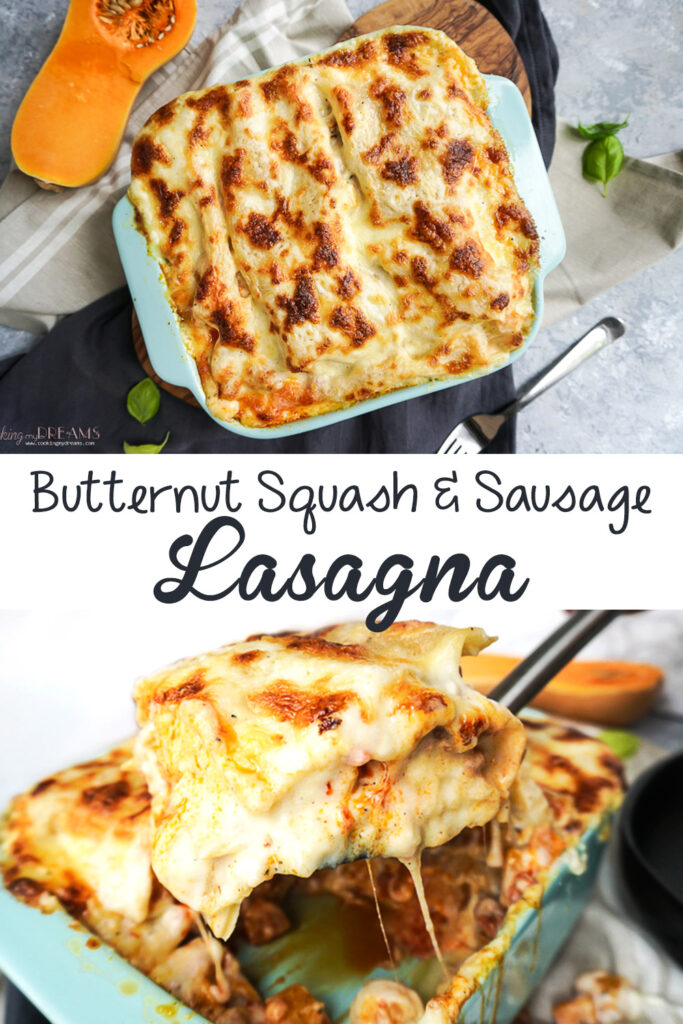
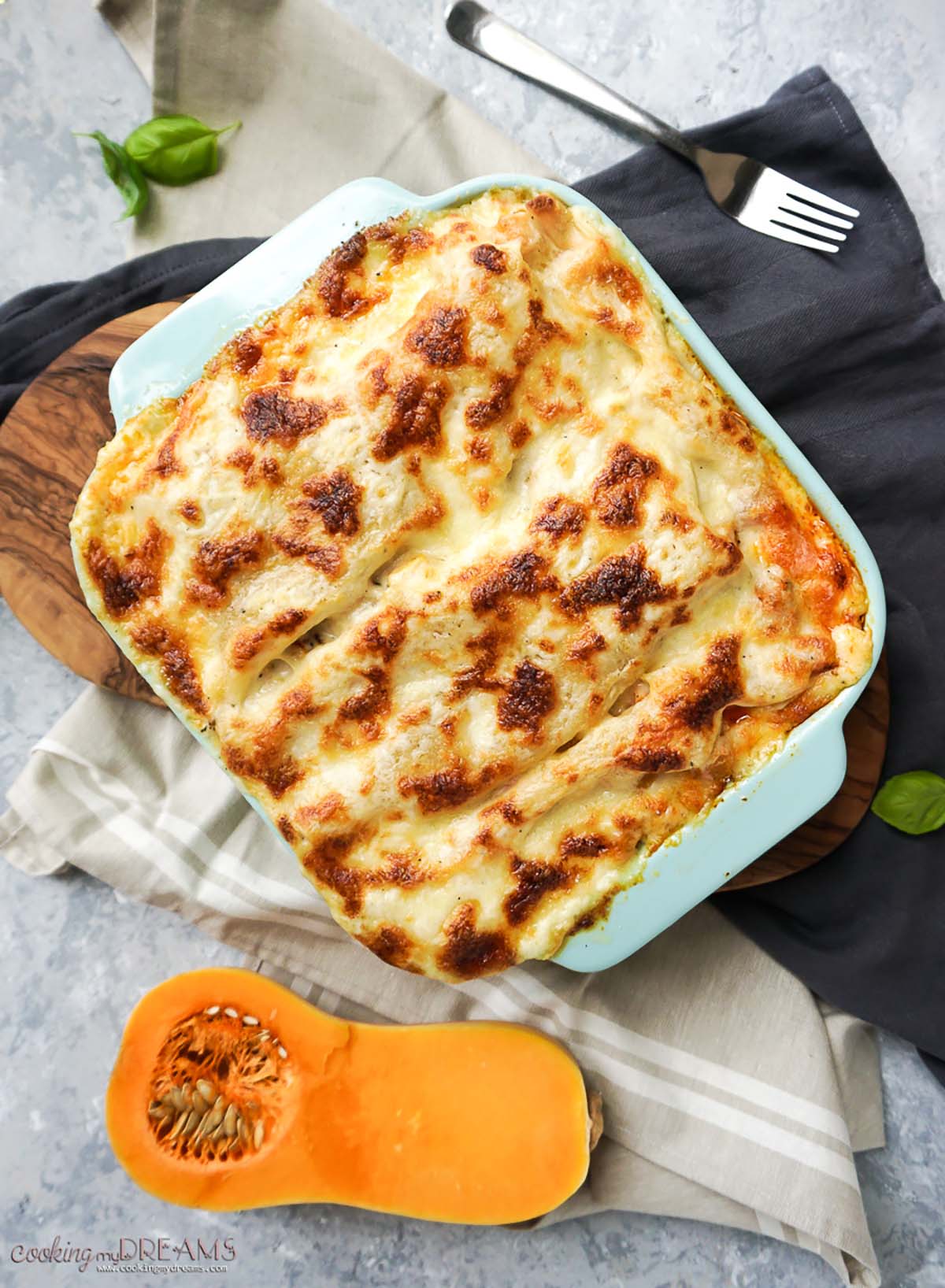
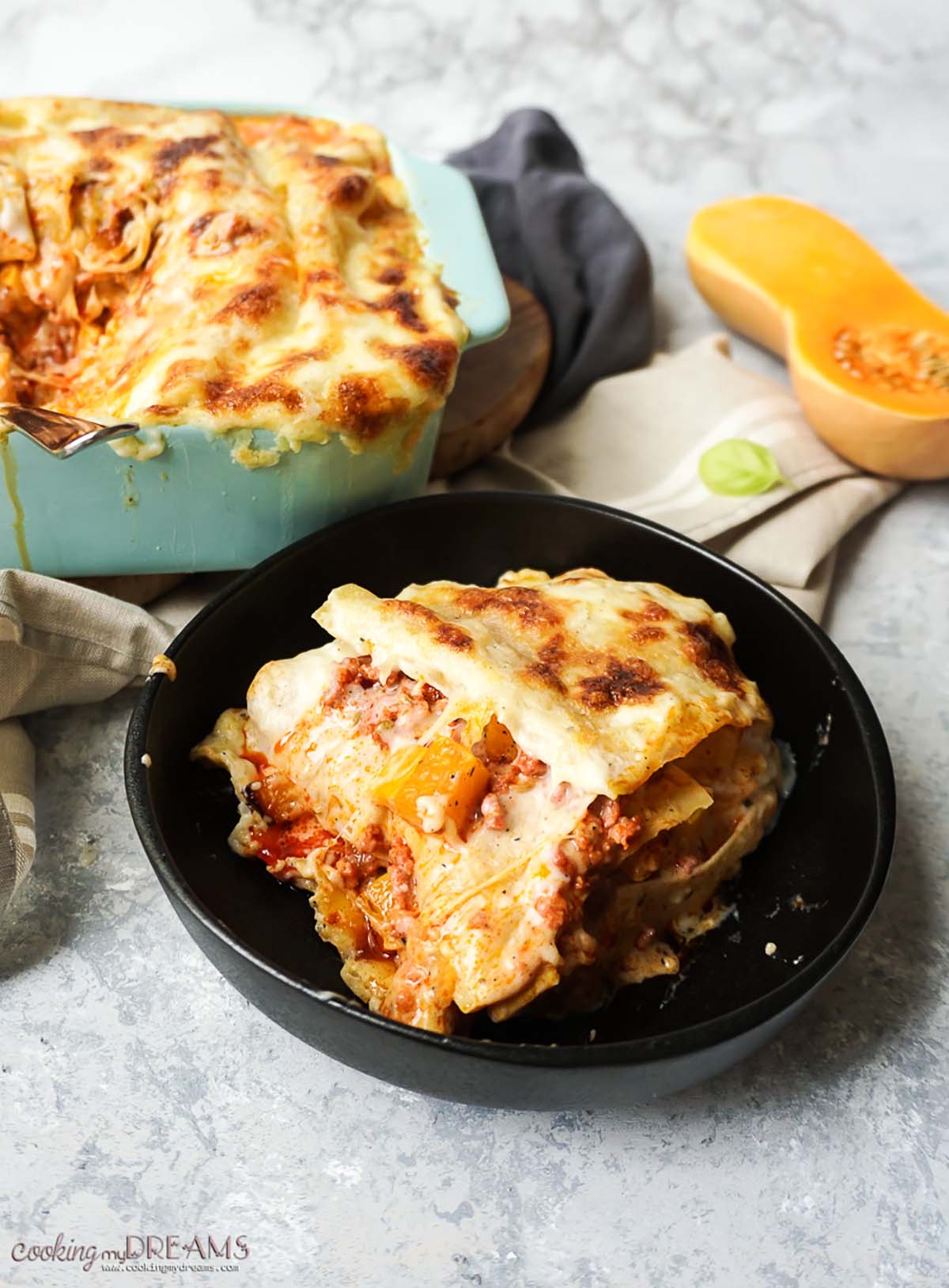
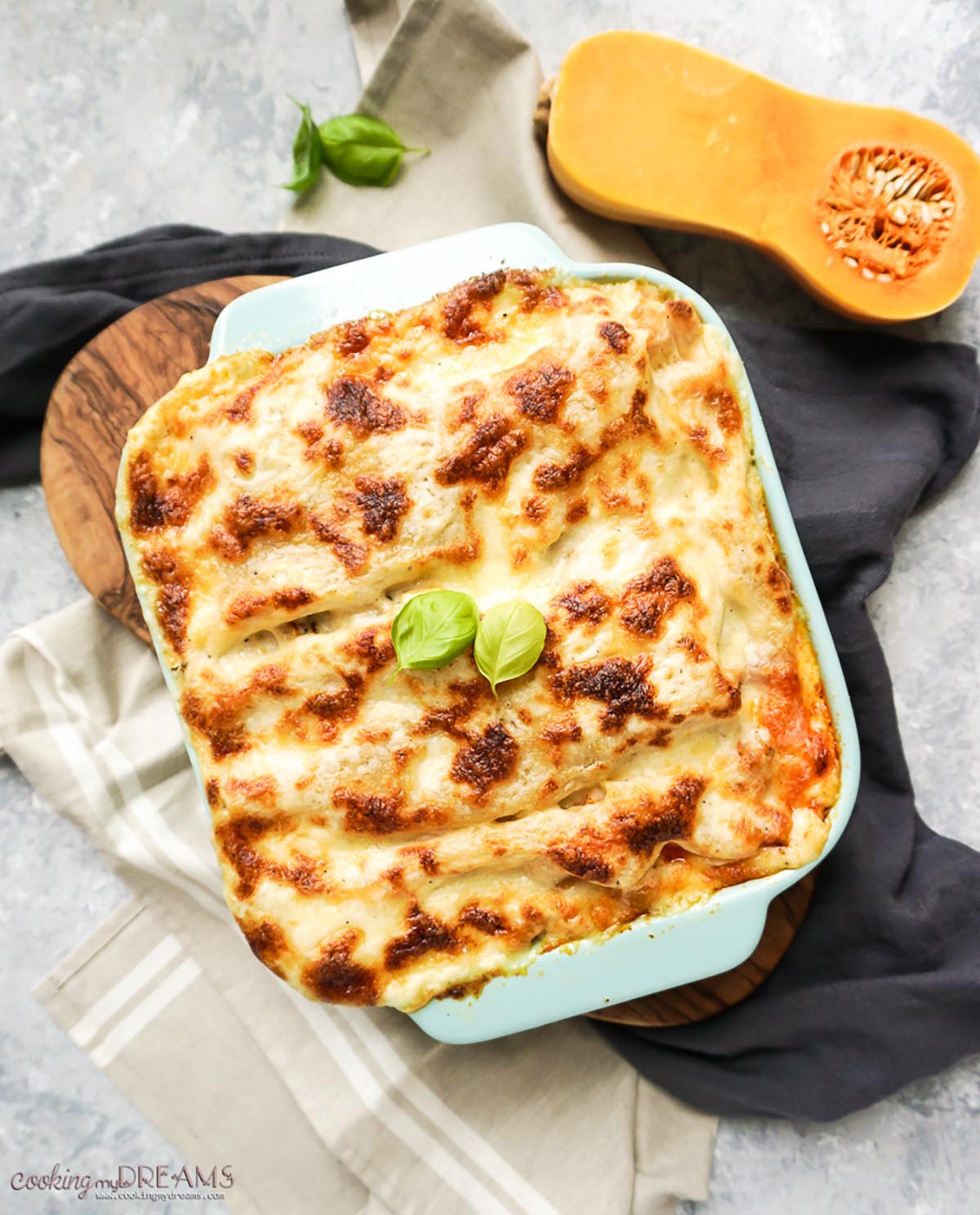
This Butternut Squash Lasagna with Italian Sausage is definitely one of the best lasagna you'll ever try. A piping hot baking dish stuffed with layers of pasta, a creamy filling of Béchamel topped with roasted butternut squash, Italian sausage, and melted mozzarella.
This post may contain affiliate links, which means I may make a small commission off items you purchase at no additional cost to you.
The combination of pumpkin and sausage is a classic. The saltiness and fattiness of the sausage meat, complement wonderfully the sweetness of the pumpkin, like in this delicious Creamy Pumpkin Sausage Soup. You can use any type of sausage: spicy, with black pepper, with herbs, just as long as it's not too sweet.
The natural sweetness of the squash pairs beautifully with the spicy, savory flavors of Italian sausage and layers of gooey cheese. Whether you're making this for a special occasion or just a cozy dinner, this recipe is sure to be a crowd-pleaser. Learn how to layer butternut squash and Italian sausage for a rich, savory lasagna that balances sweet and umami flavors perfectly.
Try also this Lasagna with Artichokes and Mozzarella or this classic Classic Tuscan Lasagna (with Ragù and Béchamel).
Check out also these 10+ Butternut Squash Pasta Recipes
Jump to:
🍳 Substitutions
- Vegetarian Option: Swap the Italian sausage for sautéed mushrooms or spinach.
- Dairy-Free Version: Use dairy-free mozzarella, and replace the milk with cashew or almond milk.
- Gluten-Free Alternative: Use gluten-free lasagna noodles.
- Lighter Version: Substitute whole milk or heavy cream with low-fat milk or Greek yogurt.
🥣 Variations
- Spicy Kick: Use spicy Italian sausage and add a pinch of red pepper flakes to the butternut squash sauce.
- Nutty Twist: Add a handful of toasted walnuts between the layers for extra crunch.
- Herb-Infused: Stir fresh sage or thyme into the butternut squash for an earthy flavor.
- Extra Cheesy: Add a layer of provolone or fontina cheese for extra richness.
- Pumpkin Swap: Replace butternut squash with pumpkin puree for a slightly different seasonal flavor.
❄️ Storage and Reheating
Refrigerator:
Store leftovers in an airtight container in the fridge for up to 4 days. Reheat individual portions in the microwave for 2-3 minutes or until heated through.
Freezer:
This lasagna freezes beautifully! Assemble the butternut squash and Italian sausage lasagna but don't bake it, then cover tightly with foil and freeze for up to 3 months. When ready to bake, let it thaw in the fridge overnight and bake at 375°F (190°C) for 45-50 minutes until hot and bubbly.
For already baked leftovers, freeze in portions, wrap in plastic wrap, and store in an airtight container. Reheat in the oven at 350°F (175°C) for 20-25 minutes.
🍽 Serving Suggestions
Pair it with a crisp green salad tossed in a light balsamic vinaigrette to add freshness and balance to the creamy layers. Warm garlic bread or a crusty artisan loaf is perfect for soaking up any extra sauce.
For a cozy fall or winter dinner, enjoy it alongside a glass of medium-bodied red wine, sparkling water with lemon, or warm apple cider. Allow the lasagna to rest for 10-15 minutes before slicing to help it hold its shape and make serving easier.
💭 Recipe FAQs
Yes! Assemble it up to a day in advance, cover, and store it in the refrigerator. When ready to bake, add 10 extra minutes to the cooking time.
If using oven-ready noodles, no. If using regular lasagna noodles, boil them according to the package instructions before layering.
Tips & troubleshooting
Making a perfect lasagna may seem pretty easy, layer after layer until the pan is full. There is a lot of thinking behind how the layers are constructed.
- The first layer. The first layer should always be a layer of sauce only. Either white or tomato it doesn't matter, as long as the sauce evenly coats the bottom of the dish. This is to prevent the pasta from sticking to the dish.
- The Pasta. You can either use dried pasta or fresh pasta. In both cases, you can use it raw to layer the lasagna or blanch it first. If you use the dried pasta raw, make sure to use oven-ready lasagna sheets and that there is enough sauce to cover them so they can cook evenly. If you want to make sure they don't come out al dente, boil the pasta sheets for 1-2 minutes then set them on a clean towel to rest until you need to use them (don't overlap them otherwise they'll stick).
- The Sauce. The sauce can be either Bèchamel (also called White Sauce) or tomato-based like Ragù (also called Bolognese Sauce) or both of them together (which is how a classic Tuscan Lasagna is made).
- The Cheese. On each layer, you can add some cheese which melts nicely like Mozzarella, Buffalo Mozzarella, or Scamorza. In every version of Lasagne, including the traditional version, is customary to add a sprinkle of Parmigiano cheese on each layer. In addition, in the South of Italy is also used Ricotta cheese, especially in the Neapolitan Lasagne recipe.
- The Layers. Most importantly, to be called a real Lasagna, it should have at least 4-5 layers. This is not up for discussion. Each layer should have the same amount of sauce, cheese, and any other ingredients. After you make each layer, press with your hands gently on the pasta sheets to remove the air and compact the layers. This will give you more room in the pan to make more layers!
- The final layer. The very final layer of a Lasagna should always have a generous amount of grated Parmigiano cheese. The cheese will make a nice bubbly and crunchy crust which in my opinion is the best part of the dish.
Related Recipes you might like
If you like this recipe, try also these other delicious pasta recipes:
- Pasta with Pumpkin and 'Nduja sauce
- Italian Sausage Pasta
- Creamy Pasta with Cheese and Potatoes
- Creamy Butternut Squash Pasta Bake
If you tried this recipe, please take a moment to rate it and share your thoughts in the comments. Your feedback means a lot to me! ★★★★★
📖 RECIPE
Ingredients
Method
- Preheat the oven to 220°C (430°F).
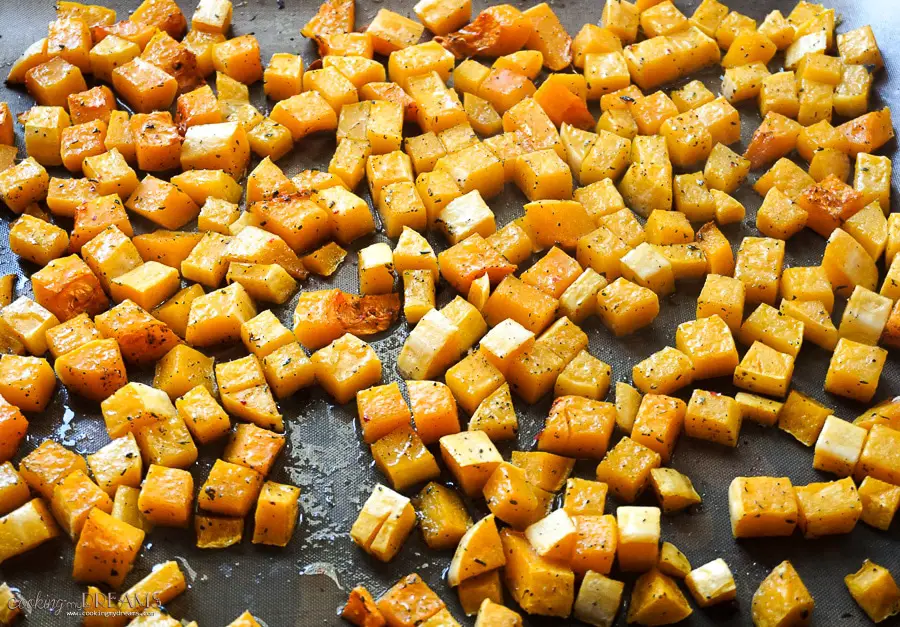
- Peel the butternut squash, cut in half, remove the seeds and chop into small cubes.
- Spread the squash cubes on a baking tray, then drizzle some olive oil, add the thyme, oregano, salt and black pepper. Mix well with your hands until it's all evenly coated.
- Bake in the preheated oven for about 20 minutes.
- Meanwhile, remove the sausages from their cases and break them in a non-stick pan. Cook for 10-15 minutes at medium heat continuing breaking them with a wooden spoon. Then set aside.
- At the same time, you can make the béchamel. In a large pot melt the butter at medium heat. When fully melted, add the flour and mix with a wooden spoon for a minute or two to make the roux. Add the milk and mix well until the roux is completely dissolved.
- Bring to boil then turn down the heat and let it simmer until it becomes creamy and can coat the spoon. Mix every so often to avoid it sticking to the bottom of the pan.
- When you have the right consistency of béchamel, season with salt, black pepper and a pinch of nutmeg. Turn off the heat and set aside.
- When the butternut squash is ready, remove it from the oven and turn the oven down to 190°C (375°F).
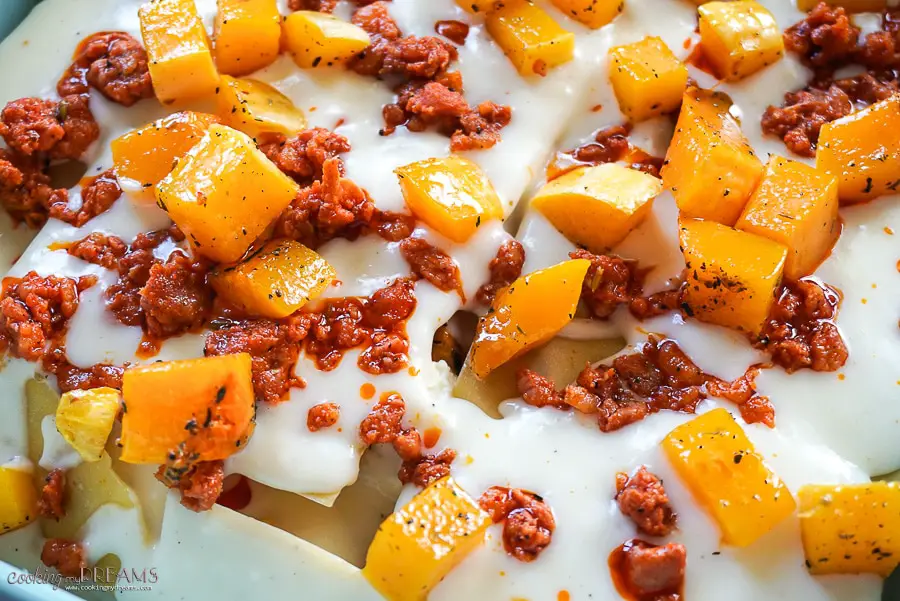
- Use a square or rectangular baking dish, I used a 20x20 cm (8x8"). Add a layer of sauce, then add a layer of pasta and another layer of béchamel sauce.
- Add the sausage crumbles and the butternut squash cubes, do not add too much filling, it should be spread out. Add some mozzarella cheese and some Parmigiano. Then start again with the pasta layer. Repeat until the dish is full.
- As final layer sprinkle a generous amount of Parmigiano cheese, to get a nice crust.
- Bake in the preheated oven for about 35 minutes (also check the packaging directions of your pasta). If the crust starts browning too early, cover with aluminum foil.
Nutrition
Nutritional information is only an estimate. The accuracy of the nutritional information for any recipe on this site is not guaranteed.
Kiki Simpson says
This looks wonderful! I am going to need to try this for fall. However, I am mostly vegetarian, so I am trying to brainstorm how I can get some amazing flavors in there without the sausage?? Won't be nearly the same, but I am thinking mushrooms, maybe some caramelized onions and spinach or kale?? Thanks so much for such a beautiful idea!
Jessica - Cooking my Dreams says
Hi Kiki, yes absolutely mushrooms pair so well with pumpkin! Especially if you can find dried Porcini mushrooms. I would absolutely eat lasagna with butternut squash, mushrooms, caramelized onions, and spinach. It sounds perfect! Let me know if you try it 😛
Lidija says
I just LOVED this dish... so much flavor! With a glass (or two 🙂 of red wine, it's my perfect comfort food for autumn 🙂 Thanks Jess!!!